Your energy, mood, focus, and physical capacity change predictably every week of your cycle because four hormones are shifting in a pattern that has always been there. Here is how to work with it instead of against it.
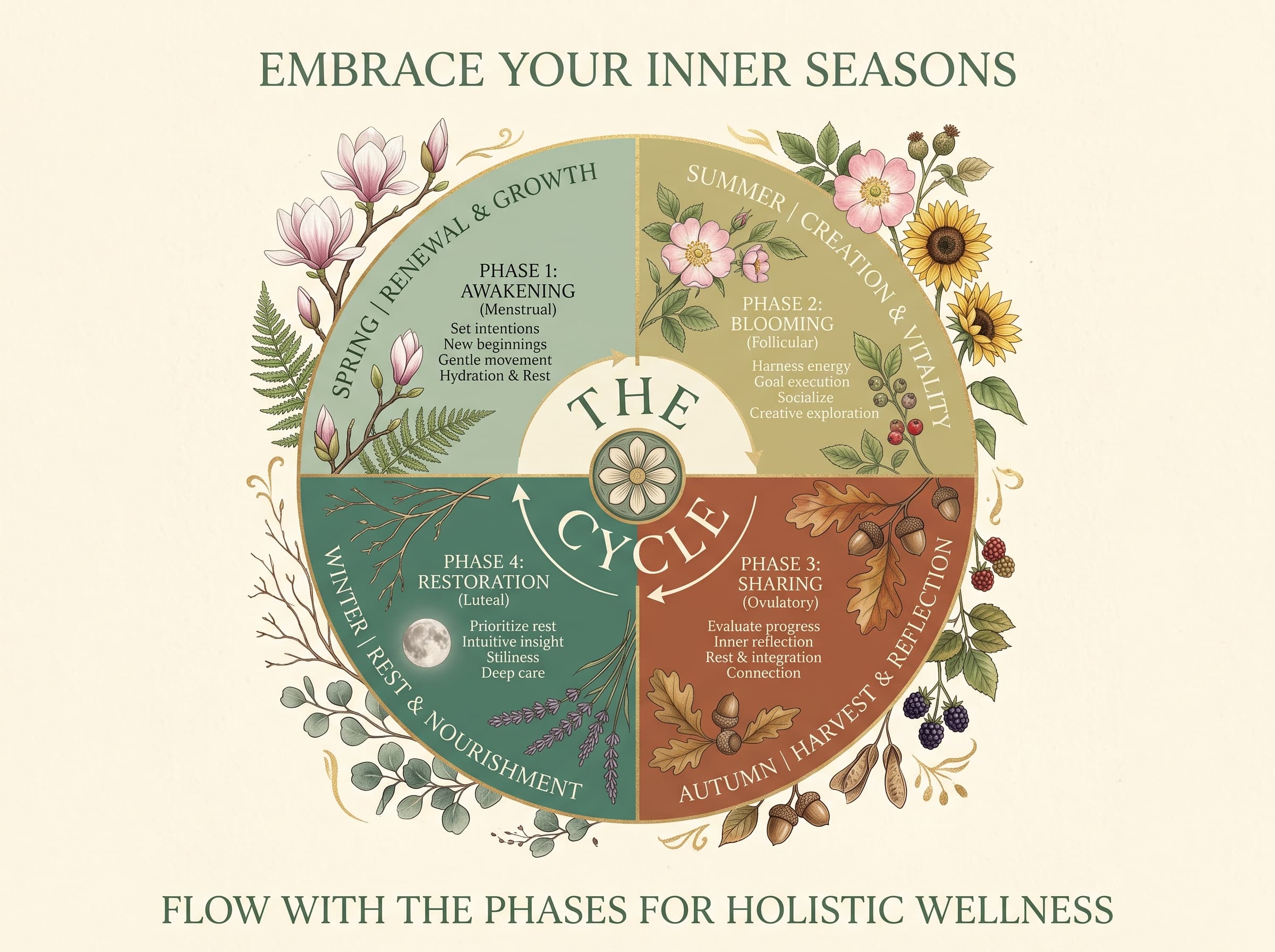
How to Sync Your Life to Your Cycle and Stop Fighting Your Own Biology
There is a reason some weeks feel like you could conquer anything and other weeks feel like you are wading through water. Some days your communication is sharp, your confidence is high, and you are genuinely enjoying being around people. Other days the same situations feel overwhelming, your tolerance is lower, and all you want is quiet.
This is not mood instability. It is not weakness. It is four hormones shifting in a predictable, reliable pattern every cycle, creating four distinctly different physiological and neurological environments across the four weeks of your month.
The concept of cycle syncing is simply this: once you understand that pattern, you can stop scheduling your life against it and start scheduling it with it.
The Four Phases and What Is Actually Happening in Each One
Phase 1: Menstrual (Days 1-5)
Estrogen and progesterone are both at their lowest point. The uterine lining sheds. Energy is at its lowest. The neurochemical environment is quiet and introspective.
This is not the phase to push. The biology is directing resources inward. Women who force high output during menstruation do so at a cortisol cost. Rest during this phase is not unproductive. It is laying the hormonal foundation for the peak performance phase that follows.
What this phase supports: reflective work, creative thinking without pressure, planning, journaling, slow movement such as walking or gentle yoga.
What to eat: iron-rich warming foods to replenish what is lost. Red meat, dark leafy greens, lentils, bone broth. Ginger and turmeric to reduce the inflammatory prostaglandins driving cramping.
Phase 2: Follicular (Days 6-13)
Estrogen begins rising as the follicle develops toward ovulation. This estrogen rise does several things simultaneously. It improves verbal fluency, working memory, and cognitive flexibility. It increases physical energy and endurance. It boosts mood and motivation. The follicular phase is when the neurological environment most closely resembles what most productivity advice assumes is the baseline.
This is the phase to schedule your most demanding creative work, new projects, learning, and social engagements.
What to eat: light, easily digestible proteins. Fermented foods to support the microbiome as it resets. Flaxseed and pumpkin seeds (the follicular phase seeds in seed cycling) to support rising estrogen in appropriate amounts.
Phase 3: Ovulatory (Days 14-16)
Estrogen peaks at its highest point of the entire cycle. Simultaneously, testosterone briefly spikes. The result is the sharpest verbal fluency, highest pain tolerance, strongest immune function, greatest physical performance capacity, and maximum social confidence of any phase.
This is when your brain is literally operating at its most capable. The women who understand this schedule their most demanding professional tasks, difficult conversations, presentations, and high-stakes negotiations during this window.
What to eat: raw salads and cruciferous vegetables to support the liver metabolism of the peak estrogen. Zinc-rich foods like shellfish to support ovulation. Red berries for antioxidant support.
Phase 4: Luteal (Days 17-28)
After ovulation, the follicle becomes the corpus luteum and begins producing progesterone. Progesterone has a calming, sedative effect through its metabolite allopregnanolone, which activates GABA receptors. This is why the first half of the luteal phase can feel unusually calm and settled.
But progesterone declines in the final week before menstruation. As it falls, the GABA support it provided falls with it. This is the neurochemical origin of premenstrual anxiety, sleep disruption, and emotional sensitivity. The brain's inhibitory brake is loosening.
Energy and physical performance capacity decrease from the ovulatory peak. The phase is biologically oriented toward completion, review, and preparation rather than initiation.
What to eat: magnesium-rich foods to prevent the late luteal depletion that drives anxiety and cramping. Pumpkin seeds, dark chocolate above 85%, dark leafy greens. Sweet potato and complex carbohydrates to support the serotonin drop that accompanies progesterone's rise. Sesame and sunflower seeds (the luteal phase seeds in seed cycling).
Why PMS Is Not Inevitable
Premenstrual symptoms of the severity that affect daily life, relationships, and work are not a baseline female experience. They are a signal that the late luteal phase hormonal environment has become dysregulated.
The primary drivers are addressable:
Magnesium depletion in the late luteal phase is responsible for the anxiety, insomnia, cramping, and chocolate cravings that cluster in the final week before menstruation. Increasing magnesium through food and a glycinate supplement began showing results within one to two cycles for most women.
Blood sugar instability during the luteal phase amplifies every PMS symptom because cortisol rises to correct each blood sugar crash, and cortisol suppresses the progesterone that was already declining. Eating protein and fat with every meal in the luteal phase is more impactful for PMS than most supplements.
Inflammatory prostaglandins from an omega-6 dominant diet drive cramp severity. Shifting the omega-6 to omega-3 ratio through fatty fish and elimination of seed oils reduces prostaglandin-driven cramping.
The Seed Cycling Protocol
Seed cycling is a simple daily practice that provides phase-appropriate nutritional support across the cycle.
Days 1-14 (follicular and ovulatory phases):
One tablespoon of ground flaxseed and one tablespoon of ground pumpkin seeds daily. Lignans in flaxseed modulate estrogen receptor sensitivity. Zinc in pumpkin seeds supports follicle development and ovulation timing.
Days 15-28 (luteal phase):
One tablespoon of ground sesame seeds and one tablespoon of ground sunflower seeds daily. Sesame provides zinc and selenium for the corpus luteum's progesterone production. Sunflower provides vitamin E which directly supports corpus luteum function.
Always use ground seeds for full nutrient release. Start on day one of your next cycle and give it three full cycles before assessing results.
How to Actually Implement Cycle Syncing
The most common mistake is trying to change everything at once. Start with one area.
Start with exercise. Stop pushing the same intensity every day of the month. Allow genuine rest or gentle movement during menstruation. Increase intensity through the follicular phase. Peak during ovulation. Reduce volume and intensity gradually through the luteal phase.
Then add food adjustments. The cycle syncing food framework is not a strict protocol. It is a general orientation toward phase-appropriate nutrition applied flexibly.
Then add scheduling. Once you have tracked your cycle for two to three months and you know which days correspond to which phase for your individual cycle length, you can begin orienting your professional schedule, social commitments, and rest periods to align with your hormonal capacity.
The goal is not perfection. The goal is enough alignment with your biology that you stop spending energy fighting a pattern that was never going to change and start using that energy for what you actually want to do.
This article is for educational purposes only. Individual cycles vary. Consult a healthcare provider for guidance specific to your health situation.
More from Her Healthy Empire
The 10-Minute Habit After Meals That May Help Your Blood Sugar and Energy
A short walk after eating may do more than help you feel less sluggish. Research suggests post-meal movement can support the body’s glucose response, while adding an easy source of daily physical activity.
Why You’re Always Tired After 40, Even When You’re Getting Enough Sleep
Feeling exhausted even after a full night of sleep? Discover the overlooked reasons women over 40 may struggle with persistent fatigue, including sleep quality, perimenopause, iron, thyroid health, nutrition, stress, and more.
Period Changes in Perimenopause: What Is Normal?
Perimenopause can change cycle timing, flow, and duration. Some changes are expected, while unusual bleeding still deserves medical evaluation.
The next her healthy empire essay in your inbox.
One careful letter, every Sunday. Free.