A short walk after eating may do more than help you feel less sluggish. Research suggests post-meal movement can support the body’s glucose response, while adding an easy source of daily physical activity.
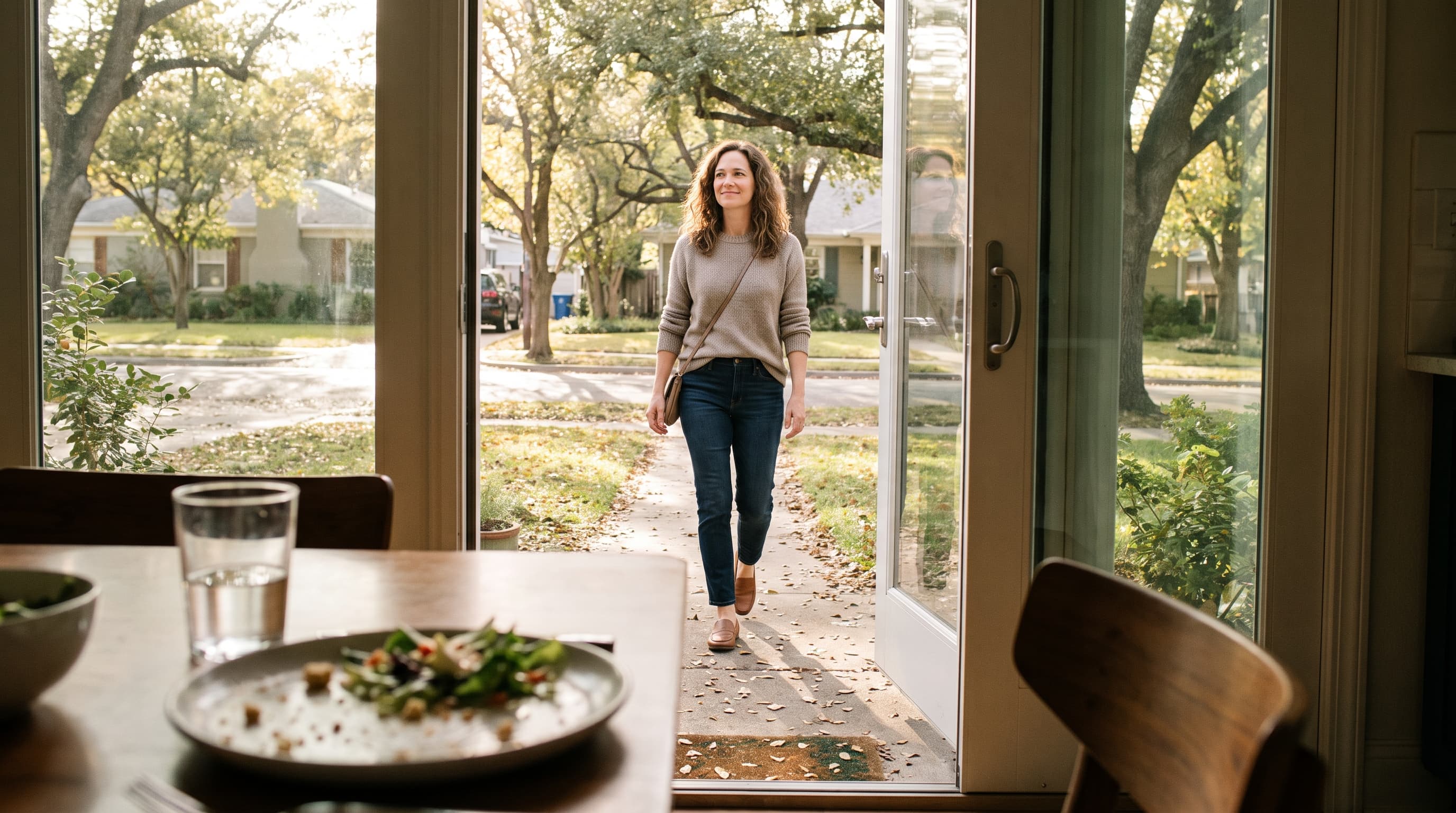
The Small Habit That Starts After You Put Down Your Fork
You finish dinner.
The dishes are still on the table.
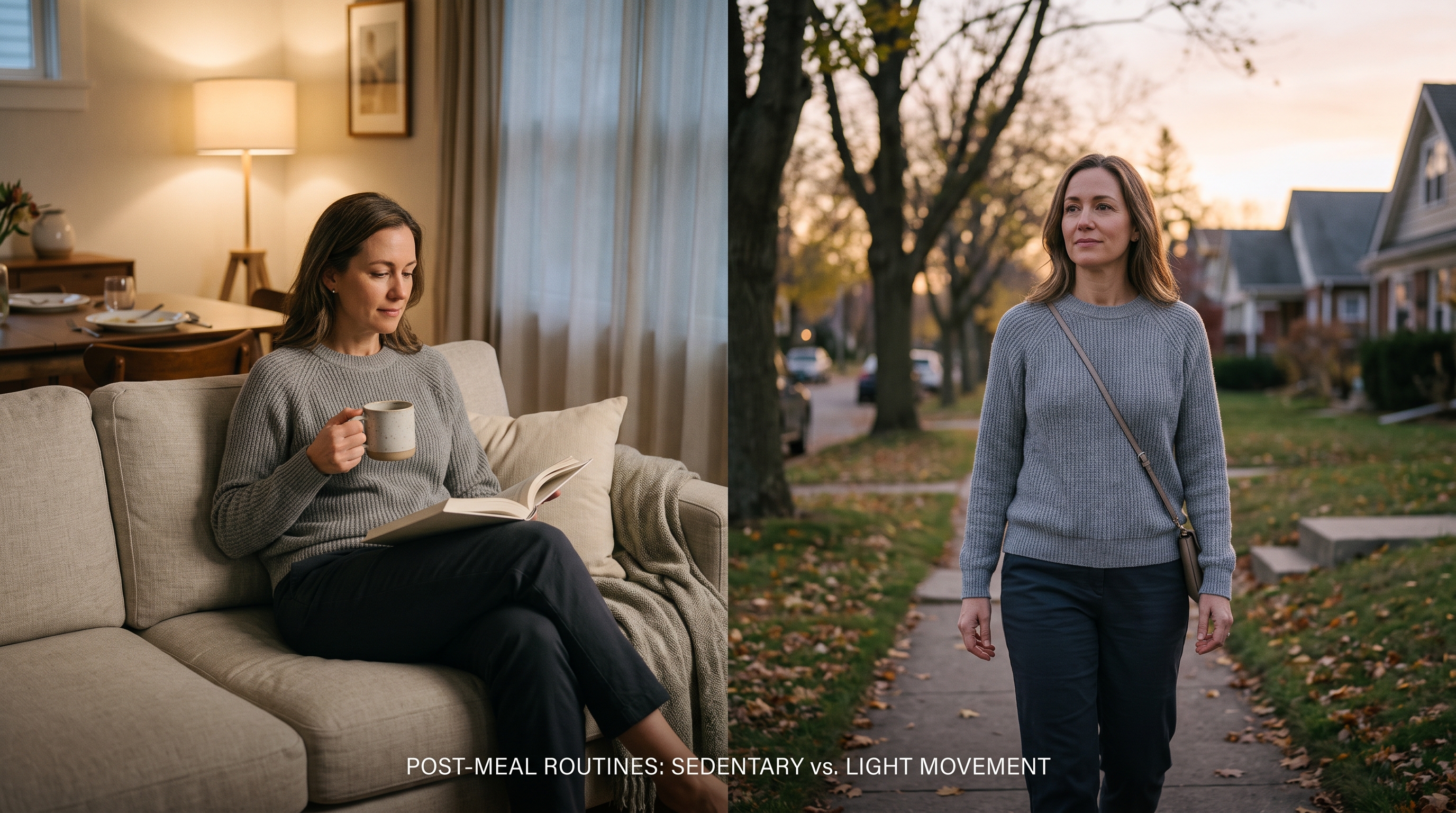
Your instinct is to move straight to the couch, open your phone, or settle in for the evening.
But there is another option that takes surprisingly little time:
Go for a short walk.
Walking after a meal is not a miracle treatment, and you do not need to turn dinner into a workout session.
But research suggests that physical activity performed after eating can reduce the rise in blood glucose that normally follows a meal. Studies have found benefits from post-meal walking in several populations, although the size of the effect differs depending on factors such as health status, meal composition, timing, and exercise intensity. PubMed Central (PMC)
And there is another advantage.
A 10-minute walk is small enough to actually fit into everyday life.
That makes it interesting not because it is extreme, but because it is repeatable.
What Actually Happens to Blood Sugar After You Eat?
When you eat carbohydrates, your digestive system breaks many of them down into glucose.
That glucose enters your bloodstream.
In response, your pancreas releases insulin, which helps glucose move from the blood into cells where it can be used for energy or stored for later. www.heart.org
A rise in blood glucose after eating is normal.
The goal is not to prevent your blood sugar from ever rising.
Your body is designed to handle changes in glucose after meals.
The problem becomes more relevant when glucose regulation is impaired, as can happen with insulin resistance, prediabetes, or diabetes.
Physical activity gives your muscles another reason to use glucose.
That is part of what makes movement after eating so interesting.
Why Walking After a Meal May Help
Your muscles need energy when you move.
During walking, working muscle tissue can increase glucose uptake.
That means some of the glucose circulating after a meal can be used by active muscle rather than remaining in the bloodstream.
Research comparing different exercise timings generally supports the idea that moving after eating can reduce post-meal glucose excursions, with some evidence suggesting that beginning relatively soon after eating may provide greater acute benefit than waiting much longer. PubMed
One study in older adults at risk for impaired glucose tolerance found that three 15-minute post-meal walks improved 24-hour glucose control and were particularly effective for controlling blood sugar after the evening meal. PubMed Central (PMC)
That does not mean everyone needs exactly 15 minutes.
It means the broader idea is worth understanding:
Small bouts of movement can matter.
Do You Really Need Exactly 10 Minutes?
No.
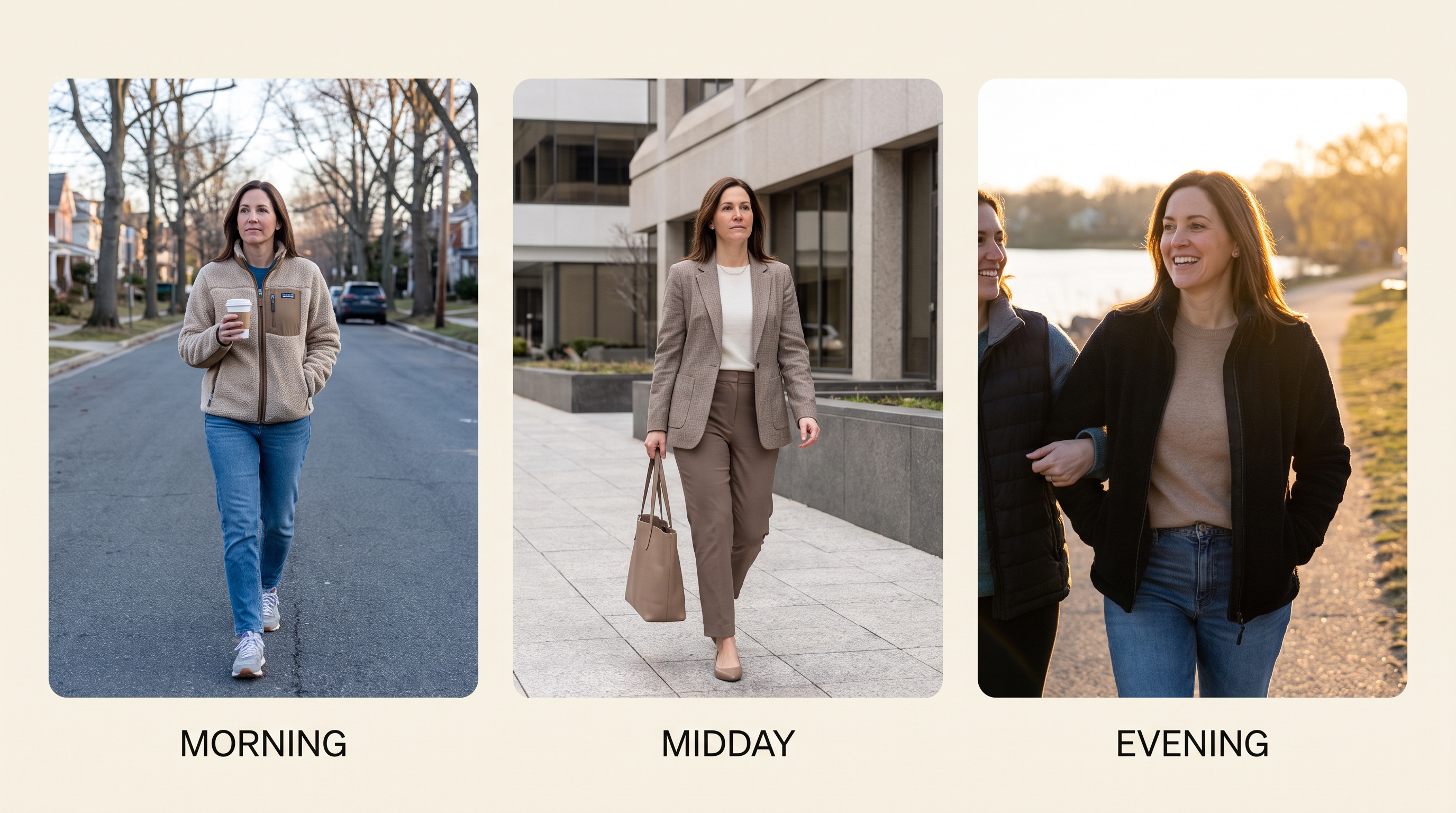
Ten minutes is useful because it is practical.
The American Heart Association even gives 10-minute brisk walks after breakfast, lunch, and dinner as an example of how shorter activity sessions can contribute toward weekly physical-activity goals. www.heart.org
Research studies have used different durations.
Some have looked at 15-minute walks.
Others have studied 20 or 30 minutes.
A 2023 systematic review concluded that walking or other exercise after meals can reduce post-meal glucose elevations, with benefits generally stronger when the activity begins sooner rather than after a long delay. PubMed Central (PMC)
So you do not need to obsess over whether your walk lasts exactly 10 minutes and 00 seconds.
Think of 10 minutes as a low-friction starting point.
If you naturally walk for 12 minutes, good.
If you have time for 20, also good.
If you only have 5 minutes today, some movement is still better than none.
The CDC specifically notes that physical activity can be accumulated in smaller chunks rather than completed all at once. CDC
The Best Time to Walk After Eating
There is no single universal minute that works perfectly for everyone.
However, research suggests the glucose-lowering effect of exercise may be stronger when movement occurs relatively soon after the meal rather than much later. PubMed
A simple practical routine is:
Finish eating.
Give yourself a few minutes if you need them.
Then begin an easy or moderately brisk walk.
You do not have to rush out of the door while you are still chewing.
For many people, beginning within roughly the first part of the post-meal period is simply easier to turn into a habit:
Meal finished → shoes on → walk.
The less complicated the sequence, the easier it becomes to repeat.
Should the Walk Be Fast?
You do not need to sprint.
A comfortable walk is still movement.
Many studies looking at post-meal activity have used light-to-moderate or moderate walking. Breaking up prolonged sitting with short bouts of light or moderate walking has also been shown to reduce post-meal glucose and insulin responses in adults with overweight or obesity. Diabetes Journals
For a general wellness walk, use a pace that feels purposeful but sustainable.
You might notice:
- Your breathing increases slightly
- You feel warmer
- Your heart rate rises somewhat
- You can still speak in sentences
- You do not feel like you are doing a formal workout
If you have a medical condition that limits activity or have been advised to follow specific exercise precautions, follow your healthcare professional’s guidance instead.
This Is Not Just About Blood Sugar
One reason I like the post-meal walk idea is that it solves more than one lifestyle problem at the same time.
It creates movement without requiring a dedicated gym session.
It breaks up long periods of sitting.
It can get you outdoors.
It creates separation between one part of the day and the next.
And those minutes count toward your overall physical activity.
Current CDC guidelines recommend that adults aim for at least 150 minutes of moderate-intensity aerobic activity per week, plus muscle-strengthening activity on at least two days each week. CDC
A short walk does not replace strength training or every other form of exercise.
But three 10-minute walks across a day would already equal 30 minutes of movement.
That is why small habits can become surprisingly meaningful when repeated.
What About the Famous “Food Coma”?
Many people describe feeling sleepy or sluggish after a large meal.
But it is worth being careful about oversimplifying that sensation.
Feeling tired after eating does not automatically mean your blood sugar “spiked and crashed.”
Post-meal fatigue can be influenced by many things, including:
- Meal size
- Sleep deprivation
- Alcohol
- Circadian rhythms
- Medications
- Overall diet
- Health conditions
- How active or inactive you are
So if you feel sleepy after lunch, do not diagnose yourself from a social media post.
A short walk may help you feel more alert simply because you have stood up, moved your body, changed your environment, and increased activity.
That is useful even without turning every afternoon slump into a blood-sugar emergency.
What Should You Eat Before the Walk?
You do not need a special “blood sugar meal.”
A balanced eating pattern is more useful than trying to hack every meal.
The American Heart Association emphasizes overall habits such as nutritious eating, physical activity, stress management, and healthy sleep as important parts of supporting healthy blood glucose. www.heart.org
A practical meal may include some combination of:
Protein
Chicken, fish, eggs, Greek yogurt, beans, lentils, tofu, cottage cheese.
High-fiber carbohydrate
Beans, oats, fruit, whole grains, potatoes, brown rice, quinoa.
Vegetables or fruit
Whatever fits your meal and preferences.
Healthy fats
Nuts, seeds, avocado, olive oil, or naturally occurring fats in foods.
You do not need to eliminate carbohydrates to justify taking a walk afterward.
The walk is not punishment for eating.
That distinction matters.
Please Do Not Turn the Walk Into a Calorie-Punishment Ritual
This habit works best when it stays simple.
You ate.
Now you move because movement is good for your body.
Not because you need to “burn off” dinner.
Not because bread needs to be earned.
Not because dessert created a debt.
Not because your meal was “bad.”
That mindset can turn a supportive health habit into something unnecessarily stressful.
Your walk can be about:
- Getting outside
- Helping your body transition after a meal
- Spending time with your partner
- Calling a friend
- Clearing your head
- Walking the dog
- Getting a few more minutes of activity
It does not need to become another rule you can fail.
Which Meal Should You Walk After?
If walking after every meal sounds unrealistic, do not start there.
Choose one meal.
Dinner is often the easiest for many people because there may be fewer work obligations immediately afterward.
But your schedule may make lunch easier.
The best meal is the one after which you can realistically repeat the habit.
Try asking:
After which meal do I usually sit for the longest period?
That may be the perfect place to begin.
The “Anchor Meal” Method
Instead of promising yourself three walks every day forever, choose one anchor meal.
For example:
Dinner = walking meal.
That means the sequence becomes automatic.
Dinner ends.
You clear the basic dishes.
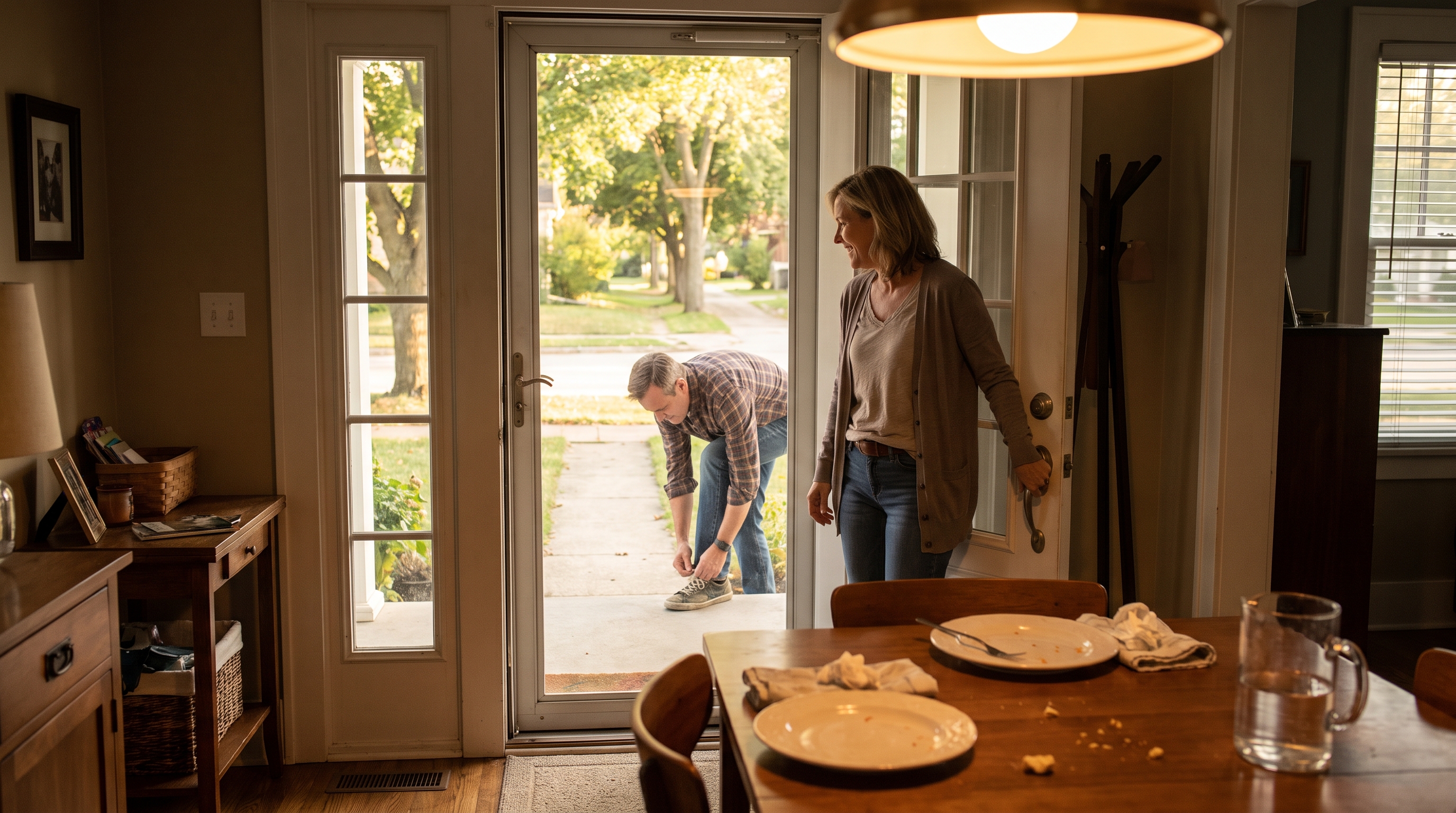
You put on shoes.
You walk.
There is less decision-making.
Once that becomes easy, you can experiment with adding another short walk after lunch.
Habit consistency usually matters more than designing a perfect routine that lasts three days.
Try This 7-Day Post-Meal Walking Experiment
Do not overhaul your life.
Test the habit.
Day 1
Choose your anchor meal.
Walk for 10 minutes afterward.
Your only job is to complete the walk.
Day 2
Repeat the same walk.
Notice how difficult or easy it is to start.
Day 3
Remove one source of friction.
Put your shoes near the door.
Keep an umbrella ready if the weather changes.
Decide on your route before eating.
Day 4
Walk without using the time as another productivity session.
No work calls.
No emails.
Just walk.
Day 5
If 10 minutes now feels easy, continue for another 5 minutes if you want.
Do not force it.
Day 6
Invite someone.
A partner, friend, child, neighbor, or dog can make the habit feel less like exercise and more like part of the evening.
Day 7
Ask four questions:
Did I actually do it?
Did it fit my schedule?
How did I feel afterward?
Would I realistically continue this next week?
That last question matters most.
A habit that looks impressive but does not survive normal life is not very useful.
What If the Weather Is Bad?
Your muscles do not know whether you are walking through a beautiful park.
Indoor movement still counts.
Try:
- Walking around your home
- Walking through a shopping center
- Using a treadmill
- Walking through an office building
- Going up and down a hallway
- Doing several minutes of comfortable movement indoors
The goal is movement.
Not scenery.
What If You Cannot Walk for 10 Minutes?
Start with what your body can safely manage.
That may be:
- 2 minutes
- 5 minutes
- Gentle standing activity
- A mobility routine
- Another form of movement appropriate for your ability
Physical activity should be adapted to the individual.
If pain, balance problems, cardiovascular symptoms, major mobility limitations, pregnancy-related restrictions, or another medical issue affects what is safe for you, ask your healthcare professional for individualized advice.
Important If You Take Diabetes Medication
If you have diabetes, especially if you use insulin or medications that can cause hypoglycemia, exercise can affect your blood glucose.
Your individual response depends on factors including medication, food, activity intensity, duration, and your glucose levels before activity.
Do not use a general wellness article to change insulin doses, medication schedules, or carbohydrate intake.
Work with your healthcare team on a safe activity plan.
The American Heart Association recommends individualized monitoring and management for people living with diabetes rather than assuming everyone responds to food and exercise in exactly the same way. www.heart.org
Do You Need a Continuous Glucose Monitor to Do This?
No.
You do not need to turn a normal walk into a data experiment.
Continuous glucose monitors can be medically important for many people with diabetes and may be used in other situations under professional guidance.
But a generally healthy person does not need to buy a glucose monitor simply to justify walking after dinner.
You can take the walk because regular physical activity is beneficial.
That is enough.
Walking Is Helpful, but Strength Training Still Matters
There is one mistake I would avoid.
Do not let walking become the only movement you ever do simply because it is convenient.
Walking is excellent aerobic activity.
But adults are also advised to perform muscle-strengthening activities at least two days per week. CDC
That can include:
- Resistance bands
- Dumbbells
- Machines
- Body-weight exercises
- Appropriate strength classes
Especially as women move through midlife, maintaining strength and function deserves attention too.
So think of post-meal walks as one piece of a broader movement routine.
Not the entire routine.
A Realistic Weekly Routine
You do not need seven perfect days.
A week might look like this:
Monday: 10-minute walk after dinner
Tuesday: Strength training + short walk after lunch
Wednesday: 15-minute walk after dinner
Thursday: Strength training
Friday: 10-minute evening walk
Saturday: Longer recreational walk, hike, or active errands
Sunday: Easy post-dinner walk
That is far more realistic than telling yourself you will suddenly exercise for an hour every morning.
The Bigger Lesson Is Not About Ten Minutes
The most useful part of this habit may be psychological.
Health advice often feels huge.
Lose weight.
Exercise more.
Sleep better.
Eat healthier.
Reduce stress.
Those goals are so broad that it can be difficult to know what to actually do at 7:15 tonight.
A post-meal walk is different.
It has a trigger.
I finish eating.
It has an action.
I walk.
And it has a small enough time commitment that your brain has fewer reasons to negotiate with you.
That is what good habits often look like.
Not dramatic.
Clear.
The Bottom Line
You do not need to walk exactly 10 minutes after every meal to be healthy.
But taking a short walk after eating is a simple habit with a meaningful evidence base.
Post-meal activity can help reduce the rise in blood glucose after eating, particularly in people who have impaired glucose regulation, and shorter bouts of walking can also contribute to your overall weekly physical activity. PubMed Central (PMC)
Start with one meal.
Keep the walk comfortable.
Make it easy to repeat.
Then see whether it becomes one of those rare health habits that fits your actual life.
Because sometimes a useful wellness routine does not require a new supplement, an expensive device, or an entirely new morning schedule.
Sometimes it begins when dinner ends.
Medical Note
This article is for general educational purposes and is not medical advice.
Walking and other physical activity can affect blood glucose. If you have diabetes, take glucose-lowering medication, have cardiovascular disease, experience recurrent dizziness or hypoglycemia, have significant mobility limitations, or have been given exercise restrictions, speak with your healthcare professional about the type and timing of activity that is appropriate for you.
More from Her Healthy Empire
Why You’re Always Tired After 40, Even When You’re Getting Enough Sleep
Feeling exhausted even after a full night of sleep? Discover the overlooked reasons women over 40 may struggle with persistent fatigue, including sleep quality, perimenopause, iron, thyroid health, nutrition, stress, and more.
Period Changes in Perimenopause: What Is Normal?
Perimenopause can change cycle timing, flow, and duration. Some changes are expected, while unusual bleeding still deserves medical evaluation.
Why Am I Always Bloated? 7 Causes Worth Understanding
Frequent bloating can come from gas, constipation, IBS, food patterns, or cycle changes. The pattern often reveals more than the symptom alone.
The next her healthy empire essay in your inbox.
One careful letter, every Sunday. Free.