The foods that clear skin are not the ones being marketed to you. The actual skin-clearing diet targets the gut inflammation, androgen activity, and systemic inflammatory load driving breakouts from the inside. Here is exactly what to eat and why.
The Skin Clearing Diet That Actually Works (And Why It Starts in Your Gut)
The conventional narrative about diet and acne has spent decades being wrong in two specific ways. First, it told us diet had nothing to do with acne. Then, when the evidence became too strong to ignore, it told us the answer was cutting dairy and sugar and that was essentially the full picture.
The actual relationship between what you eat and what your skin does is considerably more specific, considerably more interesting, and considerably more actionable than that.
Here is the full picture.
The Gut-Skin Axis: The Connection Most Dermatologists Don't Address
Your skin and your gut are connected through what researchers call the gut-skin axis. This bidirectional relationship means the state of your gut microbiome has measurable downstream effects on skin conditions including acne, rosacea, eczema, and inflammatory skin changes.
The mechanism has two primary pathways.
Intestinal permeability. When the gut lining becomes permeable, the tight junctions between intestinal cells loosen, allowing bacterial toxins, undigested food particles, and inflammatory compounds produced by dysbiotic gut bacteria to enter the bloodstream. These compounds circulate systemically. The skin, as the body's largest elimination and immune organ, is a primary site where this systemic inflammation expresses. The cystic acne that topical benzoyl peroxide temporarily suppresses has a root that is not on your face.
Androgen metabolism. The gut microbiome influences androgen hormone activity. When dysbiosis is present, androgens including testosterone and DHEA can become more active at the follicle level, driving excess sebum production, clogging pores, and feeding the bacterial environment in which acne thrives. This is specifically the category of hormonal acne that appears primarily along the jawline, chin, and lower face in women, and that follows a predictable cyclical pattern correlating with the menstrual cycle.
The Foods That Drive Skin Inflammation From the Inside
Before addressing what to eat, the dietary drivers of skin-related gut inflammation and androgen activity are worth naming specifically.
Refined seed oils. Canola, soybean, corn, sunflower, and vegetable oil are the dominant sources of omega-6 fatty acids in most Western diets. A high omega-6 to omega-3 ratio drives the systemic pro-inflammatory state that makes every skin condition worse. Seed oils also drive gut microbiome dysbiosis through their effects on gut bacteria composition.
Refined sugar and high-glycemic carbohydrates. Blood sugar spikes trigger insulin and insulin-like growth factor 1 (IGF-1) release. IGF-1 directly stimulates sebum production and the proliferation of skin cells lining the follicle. This is the glycemic-acne connection that has the strongest clinical evidence in the research on diet and acne.
Dairy. Conventional dairy contains precursors to IGF-1 and androgens that can amplify sebum production in susceptible women. The connection is not universal, but the evidence for dairy as an acne driver in a subset of women is meaningful enough to warrant a 30-day elimination test before dismissing it.
Alcohol. Alcohol depletes zinc, one of the primary minerals regulating androgen activity at the follicle level. It also damages the gut lining and disrupts the microbiome, adding to the gut-skin connection on multiple pathways simultaneously.
The Foods That Clear Skin From the Inside
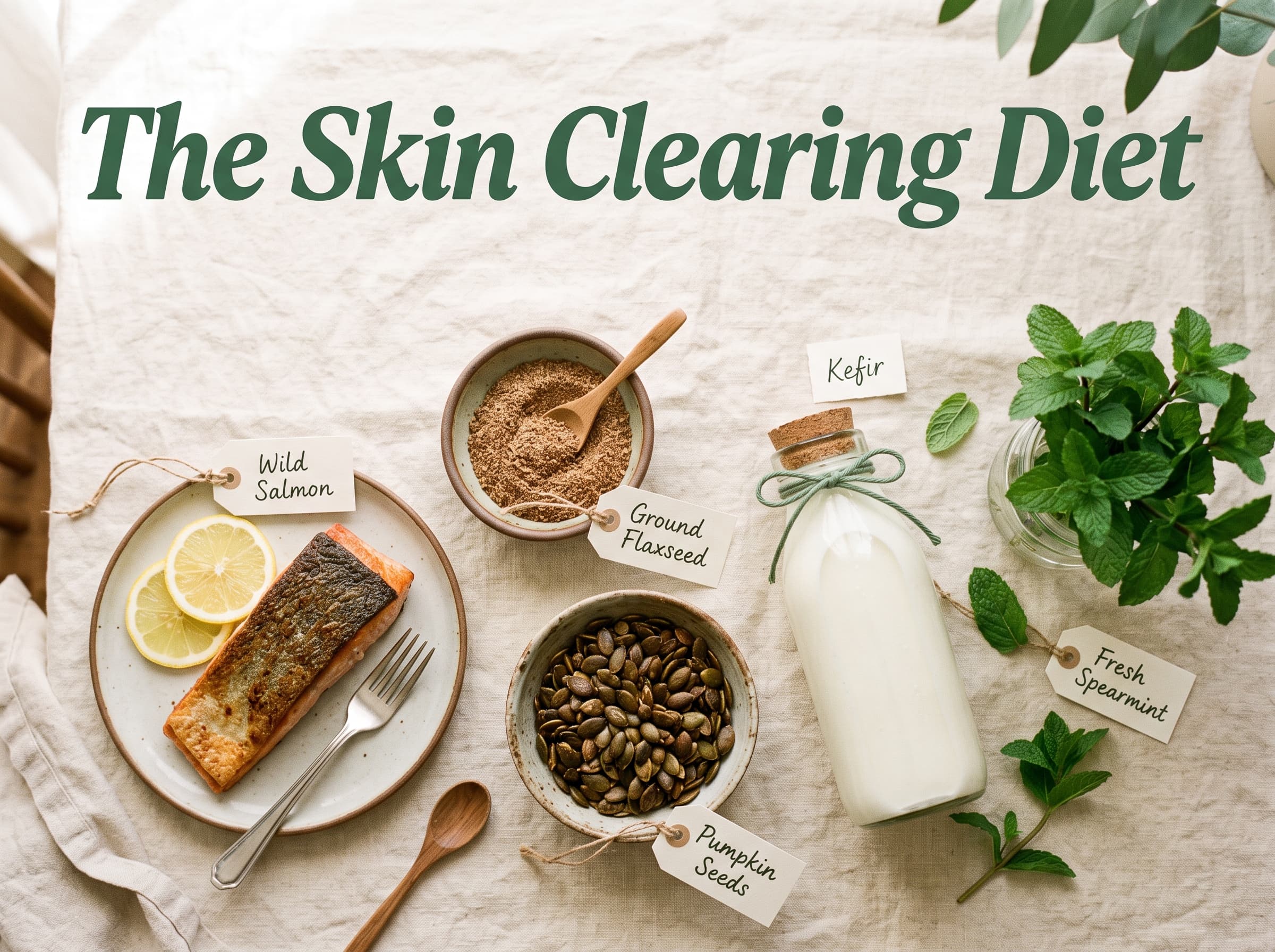
Wild Salmon (or Sardines)
Fatty fish provide EPA and DHA, the omega-3 fatty acids that reduce the inflammatory cascade driving skin inflammation at the cellular level. They also improve the omega-6 to omega-3 ratio that most Western diets have pushed dramatically out of balance. Aim for three servings per week minimum.
Ground Flaxseed
Flaxseed contains lignans, plant compounds that modulate estrogen receptor activity and reduce the androgen-driven sebum production that feeds hormonal acne. One tablespoon of ground flaxseed daily is the clinically relevant amount. It must be ground, not whole, for the lignans to be bioavailable.
Zinc-Rich Foods: Pumpkin Seeds and Oysters
Zinc is one of the most studied minerals in acne research. It directly regulates 5-alpha reductase, the enzyme that converts testosterone to its more potent form DHT within the follicle. Elevated DHT at the follicle level is a primary driver of sebum overproduction and androgen-related acne. Zinc also has anti-inflammatory properties and supports the immune response within the skin.
Pumpkin seeds are the most accessible dietary source of zinc. Oysters contain the highest concentration of any food. For women with significant hormonal acne who are not eating these foods consistently, zinc bisglycinate at 25-30mg is worth considering with a healthcare provider.
Fermented Foods: Kefir, Sauerkraut, and Kimchi
Diversifying the gut microbiome with daily fermented foods addresses the gut-skin axis at its source. These foods reduce the dysbiosis that drives intestinal permeability, reduce systemic inflammatory load, and support the androgen metabolism that happens at the gut level. The diversity of fermented foods matters more than the quantity of any single one. Vary the sources.
Spearmint
Spearmint deserves a specific mention because the evidence for it in hormonal acne is among the most specific available. Two cups of spearmint tea daily has been shown in clinical studies to produce anti-androgenic effects comparable in some parameters to low-dose spironolactone, a pharmaceutical commonly prescribed for hormonal acne. The mechanism is inhibition of 5-alpha reductase activity and reduction of free androgen levels. It is a meaningful dietary intervention, not a wellness trend.
The Gut-Healing Foods That Address Root Cause
For women whose acne has a significant gut-driven inflammatory component, healing the gut lining directly accelerates skin improvement.
Bone broth and collagen peptides provide L-glutamine, glycine, and proline that repair intestinal tight junction integrity and reduce permeability. These are the structural components the gut lining needs to rebuild itself.
Garlic and onions serve as prebiotic fuel for beneficial gut bacteria, selectively feeding the strains that reduce pathogenic bacteria and maintain microbiome diversity.
Ginger reduces intestinal inflammation and improves gut motility, both of which are relevant for women whose acne correlates with digestive sluggishness.
What the Timeline Actually Looks Like
Skin that is driven by gut inflammation and androgen activity does not clear overnight. The gut lining takes three to six weeks to show measurable improvement in permeability with targeted nutritional support. Microbiome diversity shifts are visible on testing within four to six weeks of consistent dietary change. Sebum regulation changes follow shifts in androgen metabolism, which take one to three menstrual cycles to express fully.
The realistic timeline for dietary intervention in gut-driven and hormonal acne: four to twelve weeks for meaningful improvement, with continued progress up to six months as the systemic environment shifts.
This is slower than a prescription course. It is also addressing something that the prescription course is not, which is why prescription interventions frequently stop working when they are discontinued.
This article is for educational purposes only. Please consult a dermatologist or healthcare provider for personalized acne treatment guidance.
More from Her Healthy Empire
The 10-Minute Habit After Meals That May Help Your Blood Sugar and Energy
A short walk after eating may do more than help you feel less sluggish. Research suggests post-meal movement can support the body’s glucose response, while adding an easy source of daily physical activity.
Why You’re Always Tired After 40, Even When You’re Getting Enough Sleep
Feeling exhausted even after a full night of sleep? Discover the overlooked reasons women over 40 may struggle with persistent fatigue, including sleep quality, perimenopause, iron, thyroid health, nutrition, stress, and more.
Period Changes in Perimenopause: What Is Normal?
Perimenopause can change cycle timing, flow, and duration. Some changes are expected, while unusual bleeding still deserves medical evaluation.
The next her healthy empire essay in your inbox.
One careful letter, every Sunday. Free.