The natural health space is full of remedies that have zero clinical backing. These six are different. They have been tested in controlled trials and the evidence for their specific applications is meaningful. Here is what the research actually shows.
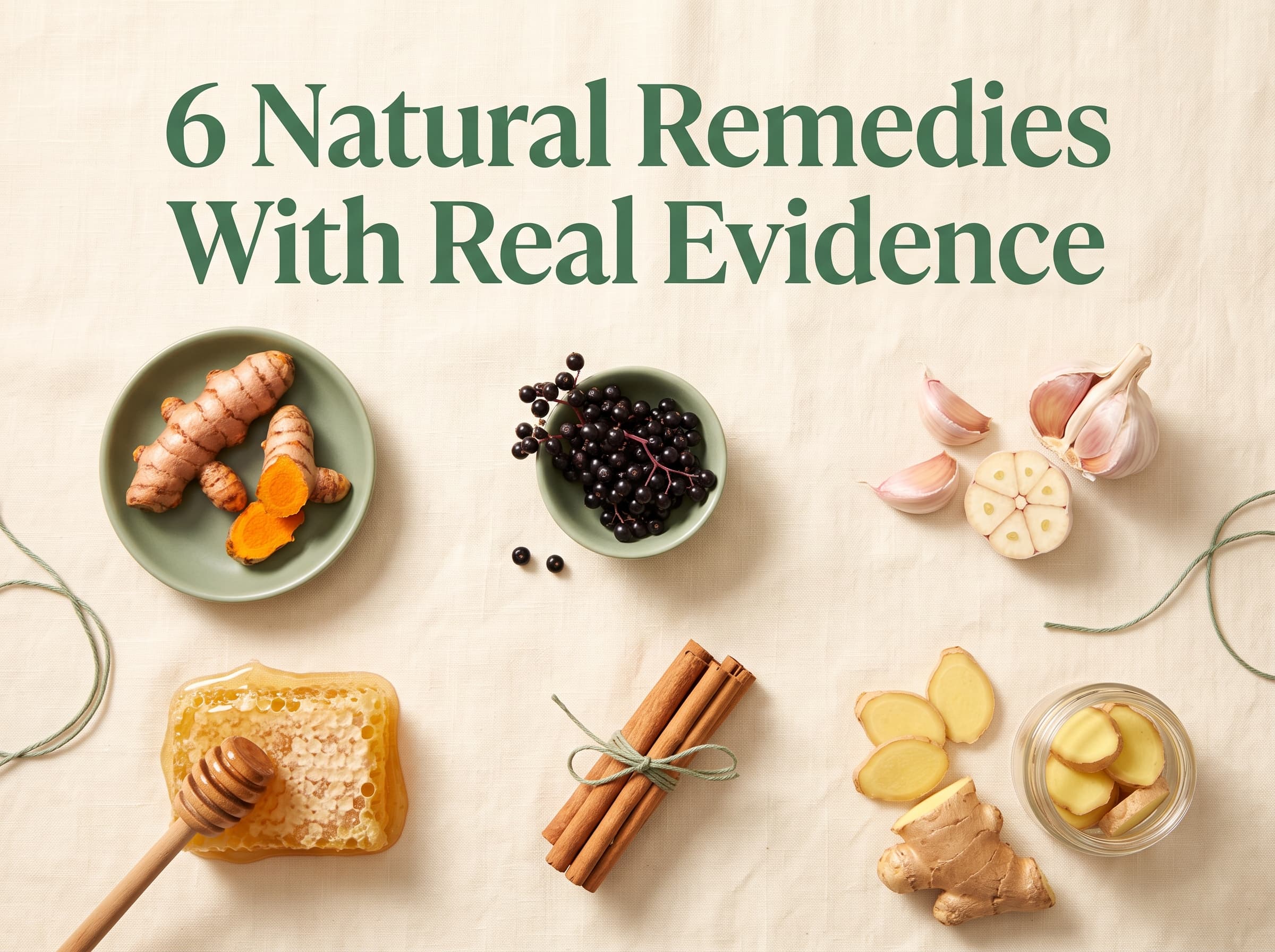
6 Natural Remedies With Clinical Evidence That Actually Deserve Your Attention
The natural health space has a significant evidence problem. The majority of remedies recommended across wellness content, social media, and even reputable-seeming health websites have either minimal clinical evidence, evidence from low-quality studies, or evidence that contradicts the claims being made.
This creates two problems. Women who dismiss natural remedies miss the ones with genuine clinical backing. Women who adopt every trending remedy spend money and effort on interventions that have no meaningful evidence for the applications being promoted.
The six remedies below are different. They have been subjected to controlled clinical testing. The evidence for their specific applications is meaningful enough to take seriously. The mechanisms are understood. The applications and limitations are specific.
1. Curcumin (from Turmeric) for Inflammation
The evidence: Multiple randomized controlled trials have compared curcumin with standardized piperine to ibuprofen and other NSAIDs for inflammatory conditions including osteoarthritis and found comparable symptom reduction without the gastrointestinal side effects associated with chronic NSAID use. The mechanism is well understood: curcumin inhibits NF-kB, the master inflammatory transcription factor, reducing the upstream source of inflammatory cytokines rather than blocking a single downstream prostaglandin pathway as NSAIDs do.
The limitation: Standard curcumin powder from turmeric has approximately 3-5% curcumin content and very low bioavailability. The absorption issue is significant. Curcumin requires either piperine (from black pepper, increasing absorption approximately 2,000%), a lipid-based delivery system, or phospholipid complexing (as in products like Meriva or BCM-95) to achieve the concentrations used in clinical studies.
The practical application: add a generous pinch of turmeric plus a pinch of black pepper to at least one daily meal. For therapeutic anti-inflammatory applications, a standardized curcumin supplement with piperine or phospholipid complex is more effective than dietary turmeric alone.
2. Garlic (Allicin) for Antimicrobial Applications
The evidence: The antimicrobial properties of garlic allicin have been documented against H. pylori (the bacteria responsible for stomach ulcers), MRSA (methicillin-resistant Staphylococcus aureus), Candida albicans, and several other pathogens in laboratory and some clinical studies. The anti-infective properties of allicin were recognized clinically long before the mechanism was understood, and the research has now identified the chemical pathway by which allicin disrupts bacterial cell membranes.
The limitation: allicin is produced when garlic is crushed or chopped and rapidly breaks down when garlic is cooked at high temperatures. Cooked garlic retains some beneficial compounds but loses most of its allicin content. Raw garlic or crushed garlic added at the very end of cooking retains significantly more active allicin than garlic cooked throughout the preparation.
The practical application: incorporate raw or lightly-cooked garlic (one to two cloves) into at least one daily meal. The garlic press your cooking deserves is the one that does the crushing that activates the allicin formation.
3. Ginger for Nausea and Inflammation
The evidence: Ginger's active compounds gingerols and shogaols have documented anti-nausea effects that compare favorably to ondansetron (a pharmaceutical anti-nausea medication) in some chemotherapy and morning sickness trials. The anti-inflammatory properties of ginger's gingerols operate through COX-2 enzyme inhibition, the same mechanism as ibuprofen, with several comparative studies showing meaningful symptom reduction for inflammatory conditions. Ginger also has well-documented effects on gut motility and gastric emptying, which underpins its traditional use for digestive complaints.
The practical application: fresh ginger in hot water first thing in the morning, incorporated into cooking throughout the day, or as a standardized extract. The fresh or dried form is more evidence-backed than most commercial ginger supplements.
4. Honey for Wound Healing
The evidence: This is one of the most surprising entries in terms of clinical strength. Honey's wound-healing properties have been validated in multiple clinical trials, and Manuka honey specifically has been compared directly to standard antibiotic wound care protocols in several studies with outcomes that in some parameters exceeded the pharmaceutical standard. The mechanism involves two primary pathways: hydrogen peroxide production (via glucose oxidase activity) that creates a sustained low-level antimicrobial environment, and osmotic pressure that dehydrates bacterial cells.
The clinical applications validated include surgical wound healing, burn treatment, and chronic wound management. Several countries have medical-grade honey formulations approved for wound care use.
The limitation: internal consumption of honey does not replicate the topical wound-healing mechanism. The internal benefits of honey are primarily glycemic if consumed in the standard table honey form. Manuka honey's internal benefits have much weaker evidence than its topical applications.
5. Elderberry for Influenza Symptom Reduction
The evidence: Elderberry (Sambucus nigra) has among the most studied profiles of any herbal supplement. The mechanism is specific: anthocyanins in elderberry bind to the surface proteins of influenza viruses and prevent them from entering host cells. Multiple randomized controlled trials have found that elderberry taken at onset of influenza symptoms reduces symptom duration by an average of two to four days compared to placebo. The dose used in most efficacy trials: 15ml of elderberry syrup four times daily at the first symptom onset, continued for four to six days.
The limitation: the evidence is specifically for influenza symptom reduction after onset, not for prevention of all respiratory illness as is commonly marketed. The anti-viral mechanism involves specific influenza surface proteins. The generalized claim that elderberry supports immunity broadly or prevents colds is not supported by the same strength of evidence as the influenza-specific applications.
6. Ceylon Cinnamon for Blood Sugar Regulation
The evidence: Multiple randomized controlled trials in individuals with type 2 diabetes and pre-diabetes have found Ceylon cinnamon at doses of 1-6 grams daily (approximately one-half to two teaspoons) reduces fasting blood glucose by 10-29% compared to placebo. The mechanisms include insulin sensitization through GLUT4 receptor upregulation and slowing of gastric emptying, both of which reduce postprandial blood glucose spikes.
The critical distinction: Ceylon cinnamon (Cinnamomum verum) contains very low concentrations of coumarin, a compound with potential liver toxicity at high doses. Cassia cinnamon (Cinnamomum cassia), which is what most cinnamon sold in the United States actually is, contains significantly higher coumarin concentrations. For regular high-dose supplementation, Ceylon cinnamon is the appropriate form.
The practical application: half a teaspoon of Ceylon cinnamon consumed at the beginning of a meal reduces postprandial blood glucose in a clinically meaningful way. As an addition to morning oats, a smoothie, or coffee, it is one of the simplest evidence-based dietary interventions for blood sugar management available.
What These Six Have in Common
They all have specific, mechanistically understood applications. The evidence for those specific applications is from controlled trials, not anecdote or observational studies alone. The limitations are known, which means the applications are more precise and more reliable than remedies with vague generalized claims.
The natural health space needs more of this precision and less of the blanket endorsements that recommend everything for everything. These six are worth knowing because the evidence says they are.
This article is for educational purposes only. None of these remedies should be used as a replacement for medical treatment. Consult a qualified healthcare provider before using any herbal supplement, particularly if you are pregnant, nursing, or taking medications.
More from Her Healthy Empire
The 10-Minute Habit After Meals That May Help Your Blood Sugar and Energy
A short walk after eating may do more than help you feel less sluggish. Research suggests post-meal movement can support the body’s glucose response, while adding an easy source of daily physical activity.
Why You’re Always Tired After 40, Even When You’re Getting Enough Sleep
Feeling exhausted even after a full night of sleep? Discover the overlooked reasons women over 40 may struggle with persistent fatigue, including sleep quality, perimenopause, iron, thyroid health, nutrition, stress, and more.
Period Changes in Perimenopause: What Is Normal?
Perimenopause can change cycle timing, flow, and duration. Some changes are expected, while unusual bleeding still deserves medical evaluation.
The next her healthy empire essay in your inbox.
One careful letter, every Sunday. Free.