The skincare industry sells you the idea that aging skin is a topical problem with topical solutions. The biology disagrees. Here is what actually drives skin aging from the inside and what specifically addresses it.
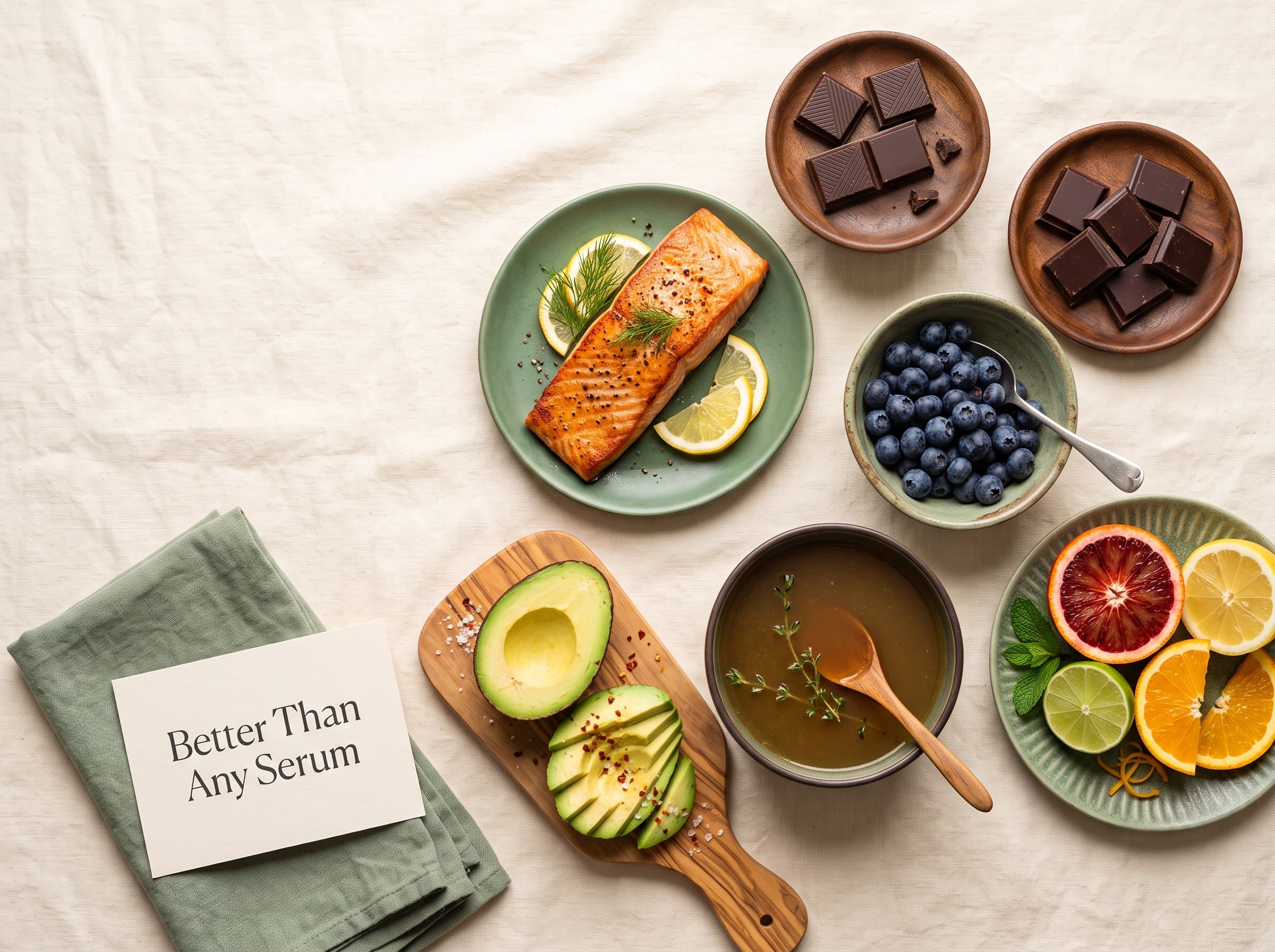
The Internal Anti-Aging Protocol That Works Better Than Any Product You Can Buy
Before we discuss what actually slows skin aging, one number is worth establishing clearly.
UV radiation accounts for approximately 80 to 90% of all visible facial aging. Not genetics. Not diet. Not stress. UV exposure is the dominant driver of the collagen breakdown, elastin loss, brown spots, and textural changes that accumulate through your 30s and 40s.
This means the most powerful anti-aging intervention that exists is a mineral SPF 30 or higher applied every single morning of your life, including cloudy days, including when you are staying indoors near windows, including when you are driving. Nothing in any skincare routine comes close to the return on investment of consistent daily SPF.
With that established, here is what the rest of the internal protocol actually looks like.
Why Topical Products Have a Ceiling
Topical skincare works on the stratum corneum and the upper layers of the dermis. The best formulations deliver actives into the skin and produce real measurable results: retinol increases cell turnover, vitamin C stimulates collagen synthesis, niacinamide improves barrier function, peptides signal fibroblasts to produce collagen.
But they all operate within the same constraint: they are addressing the surface expression of processes happening much deeper.
Collagen is degraded by an enzyme called collagenase. Collagenase is activated by UV exposure, by chronic cortisol elevation, by systemic inflammation, and by advanced glycation end products formed when sugar molecules attach to collagen fibers. No topical serum turns off the internal drivers of collagenase activity.
Elastin loss is driven by the same factors. Skin hydration is governed by the integrity of the lipid barrier in the stratum corneum and by cellular hydration at a level that dietary electrolytes influence and that topical humectants can only partly address.
To address aging meaningfully, you have to work from the inside.
The Three Internal Drivers of Accelerated Skin Aging
1. Glycation
Glycation is the process by which sugar molecules attach to collagen and elastin fibers, forming advanced glycation end products (AGEs). AGEs make the collagen fibers rigid and brittle. Instead of flexible and plump, they become stiff and prone to breaking.
The visible result is what some dermatologists call sugar face: dull complexion, deepening lines, and loss of the plumpness that depends on intact collagen architecture. Refined sugar, refined carbohydrates, and alcohol are the primary dietary drivers of glycation.
Eliminating refined sugar is not a wellness preference. It is the most direct dietary intervention for slowing collagen degradation available, and it outperforms every topical product at every price point for long-term outcomes.
2. Systemic Inflammation
Chronic low-grade systemic inflammation, sometimes called inflammaging, drives the degradation of both collagen and elastin through elevated inflammatory cytokines including TNF-alpha and IL-6. It also accelerates cellular aging through oxidative stress.
The dietary drivers of inflammaging: refined seed oils (the primary source of omega-6 fatty acids driving the imbalanced omega ratio in most Western diets), refined sugar, alcohol, and ultra-processed food. The most effective single dietary change for reducing inflammaging: eliminating seed oils and replacing them with extra virgin olive oil and avocado oil.
The non-dietary drivers: chronic sleep deprivation, which elevates inflammatory markers significantly, and chronic psychological stress, which activates the same inflammatory cascade.
3. Cortisol-Driven Collagen Degradation
Cortisol activates the enzyme matrix metalloproteinase-1, which degrades type I collagen. Chronic cortisol elevation from stress, poor sleep, over-exercising, or under-eating produces a persistent state of collagen breakdown that operates completely independently of UV exposure.
This is why women in chronically high-stress periods often notice accelerated skin changes even when their skincare routine and sun protection have not changed.
The Internal Anti-Aging Protocol
Diet
Eliminate refined sugar. This is not about being perfect. It is about recognizing that regular refined sugar consumption has a measurable, cumulative effect on collagen structure that nothing topical can reverse once it has occurred.
Eliminate refined seed oils. Canola, soybean, corn, sunflower, vegetable oil. Replace with extra virgin olive oil for low heat and salads, avocado oil for high heat cooking.
Eat collagen-supporting foods. Bone broth provides glycine and proline, the amino acids that form collagen's backbone. Wild salmon provides omega-3s that protect existing collagen from inflammatory breakdown. Bell peppers provide more vitamin C per gram than any citrus fruit, and vitamin C is an essential cofactor for collagen synthesis. Blueberries deliver anthocyanins that protect collagen from oxidative degradation.
Eat anti-inflammatory foods consistently. Fatty fish three times weekly for EPA and DHA. Extra virgin olive oil daily for oleocanthal. Turmeric with black pepper in at least one daily meal. Dark leafy greens for folate, magnesium, and vitamin K. These are not superfoods in a marketing sense. They are foods with documented anti-inflammatory mechanisms.
Sleep
Sleep is the single most evidence-supported anti-aging intervention available, and it is free.
Growth hormone is released primarily during the first 90 minutes of sleep and during slow-wave deep sleep cycles. Growth hormone drives cellular repair, collagen synthesis, and the clearing of cellular waste products including beta-amyloid. Without adequate deep sleep, the repair processes that maintain skin quality and organ function are impaired at the cellular level.
A single night of four hours of sleep increases inflammatory markers by 25%, reduces growth hormone secretion by approximately 75%, and doubles cortisol the following day. Applied chronically, the aging effect is measurable on biological age markers.
Consistent sleep before 10:30 PM matters because cortisol rises naturally if you stay awake past 11 PM, adding to the collagen-degrading inflammatory environment that quality sleep was supposed to reduce.
Stress Management
Chronic cortisol elevation is an anti-aging emergency that skincare cannot address. The most effective cortisol interventions are not supplements. They are consistent sleep, appropriate exercise (resistance training and walking rather than chronic high-intensity cardio), adequate caloric intake, and reducing the chronic life stressors that are within your control to reduce.
Adaptogens such as ashwagandha (KSM-66 extract at 300-600mg daily) reduce morning cortisol in clinical trials. They are a useful addition to a lifestyle that is already addressing the primary drivers, not a substitute for that foundation.
The Topicals Worth Adding to the Internal Protocol
Once the internal protocol is in place, the evidence-based topicals add genuine benefit on top of what the body is doing from the inside.
Retinol or retinaldehyde increases cell turnover and collagen production with among the strongest evidence of any anti-aging topical. Start at the lowest available concentration on non-consecutive nights and increase gradually.
Vitamin C serum at 10-20% L-ascorbic acid form applied to slightly damp skin before moisturizer stimulates collagen synthesis and addresses hyperpigmentation.
A ceramide-rich moisturizer addresses the barrier function decline that comes with age and makes all other products more effective by improving the surface they are applied to.
SPF every morning. Every single morning.
The protocol is simple. The consistency is the hard part and the entire point.
This article is for educational purposes only and does not constitute medical or dermatological advice. Please consult a qualified healthcare provider for personalized guidance.
More from Her Healthy Empire
The 10-Minute Habit After Meals That May Help Your Blood Sugar and Energy
A short walk after eating may do more than help you feel less sluggish. Research suggests post-meal movement can support the body’s glucose response, while adding an easy source of daily physical activity.
Why You’re Always Tired After 40, Even When You’re Getting Enough Sleep
Feeling exhausted even after a full night of sleep? Discover the overlooked reasons women over 40 may struggle with persistent fatigue, including sleep quality, perimenopause, iron, thyroid health, nutrition, stress, and more.
Period Changes in Perimenopause: What Is Normal?
Perimenopause can change cycle timing, flow, and duration. Some changes are expected, while unusual bleeding still deserves medical evaluation.
The next her healthy empire essay in your inbox.
One careful letter, every Sunday. Free.