If your hormones started feeling different after 30, you are not imagining it. Progesterone begins declining before estrogen does, and the symptoms that follow are specific, predictable, and addressable. Here is exactly where to start.
The Hormone Reset for Women Over 30: What to Do First and Why
One of the most consistent patterns in women's health is that hormone symptoms that begin in the early to mid-30s are routinely attributed to stress, aging, or general life demands, when they are in fact the early expression of a hormonal shift that is specific, predictable, and addressable.
Understanding what is actually changing, in what order, and why, is the starting point for doing something about it.
What Actually Starts Shifting in Your 30s
The conventional narrative about hormonal change in women centers on menopause and perimenopause as the primary events. This framing misses what actually happens in the decade that precedes them.
Progesterone begins declining before estrogen does. This is the most important fact that most hormone content leaves out. Progesterone production depends on ovulation: the follicle that releases the egg becomes the corpus luteum, which produces progesterone in the second half of the cycle. As ovulation quality declines gradually from the mid-30s, the corpus luteum produces progressively less progesterone. Estrogen, meanwhile, remains relatively stable or even slightly elevated during this period.
The result is a shifting estrogen-to-progesterone ratio that produces specific symptoms: worsening PMS that gets slightly worse each year, anxiety that appears or intensifies in the second half of the cycle and resolves with menstruation, sleep disruption specific to the luteal phase (the last two weeks before your period), and heavier or more irregular periods.
If your PMS has been gradually getting worse over the past several years, if your luteal phase anxiety is more noticeable than it was in your 20s, if you are waking up in the second half of your cycle at 3 AM when you never used to: this is early progesterone decline. It is not stress. It is not aging. It is a hormonal shift that began before you expected it to.
Cortisol regulation becomes less efficient. The HPA axis (hypothalamic-pituitary-adrenal axis) that regulates cortisol production becomes progressively more sensitive to disruption with age. A stress level that your 25-year-old self handled without visible hormonal consequence can produce a measurable cortisol disruption in your 35-year-old body. The result: visceral fat begins accumulating despite no dietary change, blood sugar becomes harder to regulate, sleep quality shifts, and the threshold for feeling overwhelmed decreases.
Insulin sensitivity begins shifting. As estrogen's insulin-sensitizing effect begins to subtly decline after the mid-30s, the same carbohydrate intake that produced no issues in your late 20s begins producing different metabolic responses. Many women notice for the first time in their mid-30s that certain foods now cause energy crashes or weight changes they did not produce before.
Thyroid function becomes more vulnerable. Autoimmune thyroid conditions, including Hashimotos, are most commonly diagnosed in women between the ages of 30 and 50. The immune changes of this life stage, combined with the hormonal fluctuations of the progesterone-declining period, create conditions that increase susceptibility to thyroid autoimmune activation in genetically predisposed women.
The Blood Tests Worth Getting in Your 30s
Before beginning a hormone reset, knowing your baseline is more useful than guessing at symptoms.
The comprehensive panel worth requesting:
Free T3 and Free T4 (not TSH alone): TSH shows what the pituitary is doing. Free T3 shows how much active thyroid hormone is reaching your cells. These are not the same measurement.
Fasting insulin (not just fasting glucose): insulin resistance is invisible on glucose measurements until it is advanced. Fasting insulin above 8 uIU/mL indicates developing insulin resistance years before glucose rises.
Ferritin (not just serum iron): ferritin below 70 ng/mL impairs thyroid function, energy production, cognitive function, and hair growth even when serum iron appears adequate.
Morning cortisol: a 30-minute post-waking cortisol sample reveals adrenal function and HPA axis regulation in a way that standard metabolic panels do not.
hs-CRP (high-sensitivity C-reactive protein): the most accessible biomarker for systemic inflammation that drives hormonal dysfunction. Below 1.0 mg/L is the target.
Progesterone and estradiol on days 19-21 of your cycle: the mid-luteal phase is when progesterone is at its peak. Testing at this point gives you an accurate picture of the estrogen-progesterone ratio that governs your luteal phase experience.
The Hormone Reset Protocol for Women Over 30
Morning Sequencing
The morning hormonal environment is established within the first 90 minutes of waking. Getting this right sets the cortisol curve for the entire day.
Open blinds or go outside within five minutes of waking. Morning light hitting the eyes anchors the circadian cortisol peak at the correct time. Without morning light exposure, the cortisol rhythm desynchronizes, producing afternoon and evening cortisol elevation when it should be declining.
Drink 16 oz of mineral water with a pinch of sea salt before coffee. The adrenal glands are at their most nutrient-depleted after the overnight fast. Mineral water with sea salt provides the electrolytes the adrenals require before they face the first cortisol demands of the day.
Eat a protein-rich breakfast within 90 minutes of waking. This is the most evidence-based dietary intervention for cortisol regulation available. Protein within 90 minutes of waking anchors blood sugar before cortisol can drive it into a stress pattern. The pattern of skipping breakfast or eating primarily carbohydrates in the morning prolongs the cortisol window and creates a blood sugar instability that echoes throughout the day.
Take your first coffee after 9:30-10 AM. Cortisol naturally peaks between 8 and 9 AM. Consuming caffeine during this natural cortisol peak amplifies the spike, increases anxiety, and contributes to the cortisol tolerance that many women experience (needing more coffee to achieve the same alertness). Waiting until cortisol begins declining before adding caffeine produces better cognitive effect from less caffeine.
Sleep Before 10:30 PM
Cortisol rises naturally if you remain awake past 11 PM. This secondary cortisol rise delays sleep onset, disrupts the cortisol pattern the next day, and interferes with the growth hormone release that occurs in the first 90 minutes of deep sleep.
For women over 30 who are noticing worsening luteal phase insomnia, adding magnesium glycinate at 300-400mg at bedtime addresses the GABA depletion that declining progesterone creates. Progesterone metabolizes into allopregnanolone, which activates GABA receptors and produces the calming sedative effect that supports deep sleep. As progesterone declines, this GABA support diminishes. Magnesium glycinate activates GABA receptors through a different pathway, partially compensating while progesterone support is being established.
The 28-Day Progesterone Support Cycle
Addressing the progesterone-estrogen imbalance that characterizes early perimenopause requires cycle-phase appropriate intervention.
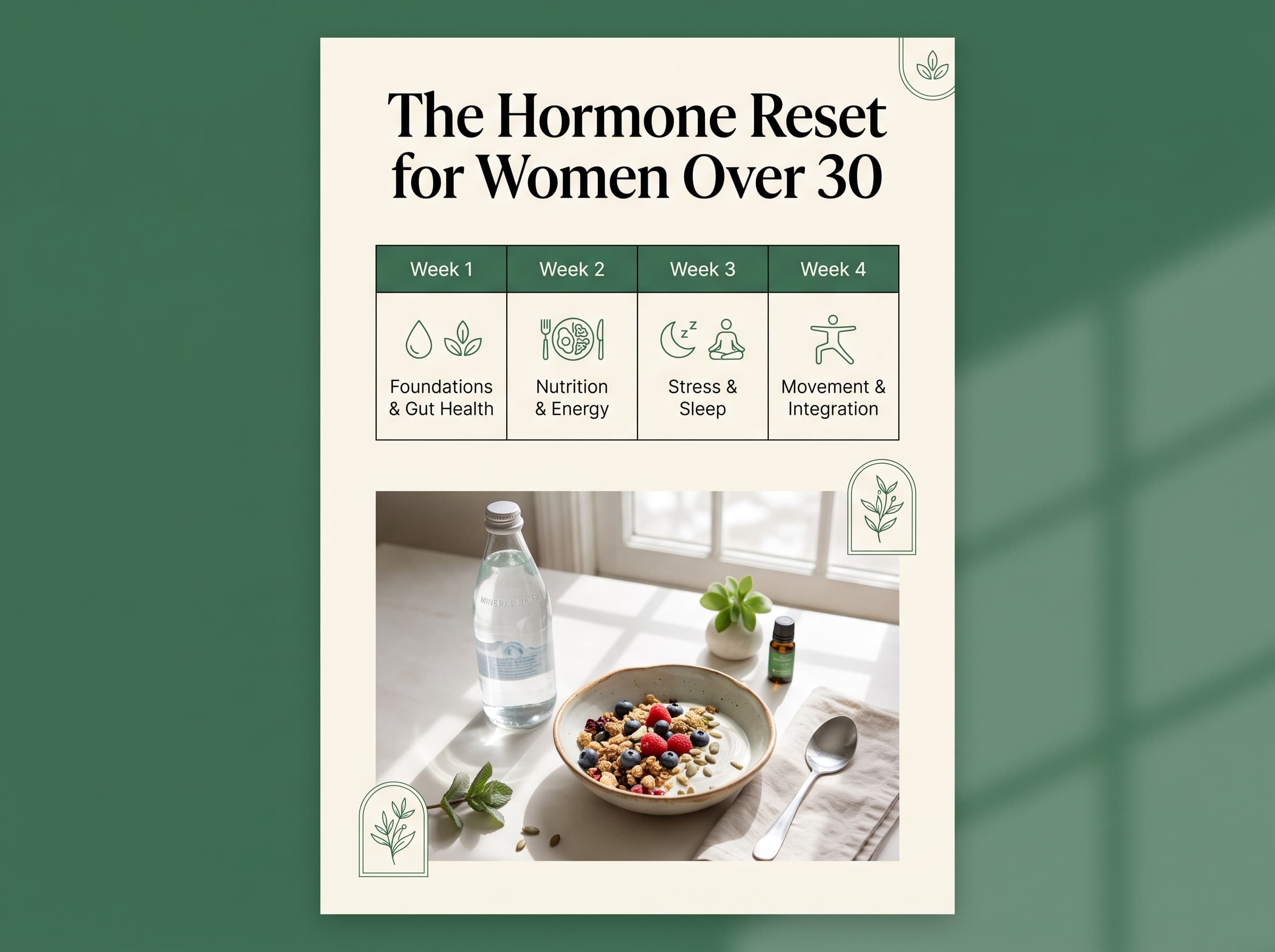
Week 1 (Menstrual): magnesium glycinate 400mg nightly. Eliminate alcohol completely this week, as alcohol suppresses progesterone production directly. Iron-rich foods daily to replenish what is lost.
Week 2 (Follicular): add zinc 25mg daily in bisglycinate form for best absorption. Begin seed cycling: one tablespoon ground flaxseed and one tablespoon ground pumpkin seeds daily.
Week 3 (Ovulatory): add vitamin B6 at 50mg daily to support corpus luteum function. The corpus luteum, which forms after the follicle releases the egg, is entirely responsible for progesterone production in the second half of the cycle. B6 is a direct cofactor for corpus luteum function.
Week 4 (Luteal): continue magnesium and increase complex carbohydrates slightly to support the serotonin drop that accompanies progesterone's rise. Reduce caffeine and eliminate alcohol completely in the final week before menstruation. The combination of caffeine amplifying anxiety and alcohol suppressing the progesterone that was already declining is one of the most common drivers of severe late luteal symptoms.
Applied for three full cycles without exception, this protocol produces measurable reduction in PMS severity in the majority of women whose symptoms have a progesterone-estrogen ratio component.
Exercise Recalibration
Women in their 30s whose hormones are shifting often find that the exercise patterns that served them in their late 20s begin producing diminishing or counterproductive results.
Chronic high-intensity cardio elevates cortisol in a hormonal environment that is already becoming more cortisol-sensitive. The recommendation: shift toward resistance training three times weekly as the primary exercise modality, and daily walking at a comfortable pace as the secondary. Walking specifically regulates cortisol without generating the post-exercise cortisol elevation that high-intensity training produces in cortisol-dominant women.
High-intensity interval training (HIIT) at a maximum of two sessions per week for no longer than 20 minutes per session can be included for women who enjoy it and are not experiencing significant cortisol symptoms. More than this in a cortisol-burdened body adds to the problem.
The Timeline for Results
Hormonal change operates on the timescale of months, not days or weeks. The sequencing above, applied consistently:
- Sleep improvement: typically the first change, often within one to two weeks of the magnesium glycinate and sleep timing changes.
- PMS severity reduction: typically measurable at the second or third cycle of consistent implementation.
- Energy stabilization: typically noticeable by month two as blood sugar patterns shift.
- Visceral fat reduction: typically the slowest change, usually visible at month three to six as the cortisol environment normalizes.
Start with sleep. Everything else works better in a body that is sleeping well.
This article is for educational purposes only and does not constitute medical advice. Please consult a qualified healthcare provider before making changes to your health regimen, particularly if you have pre-existing hormone conditions.
More from Her Healthy Empire
The 10-Minute Habit After Meals That May Help Your Blood Sugar and Energy
A short walk after eating may do more than help you feel less sluggish. Research suggests post-meal movement can support the body’s glucose response, while adding an easy source of daily physical activity.
Why You’re Always Tired After 40, Even When You’re Getting Enough Sleep
Feeling exhausted even after a full night of sleep? Discover the overlooked reasons women over 40 may struggle with persistent fatigue, including sleep quality, perimenopause, iron, thyroid health, nutrition, stress, and more.
Period Changes in Perimenopause: What Is Normal?
Perimenopause can change cycle timing, flow, and duration. Some changes are expected, while unusual bleeding still deserves medical evaluation.
The next her healthy empire essay in your inbox.
One careful letter, every Sunday. Free.