Most gut healing content tells you what to do. Almost none of it tells you what to expect and when. Here is the honest month-by-month timeline of what actually happens when you heal your gut, including the part that feels like it is getting worse before it gets better.
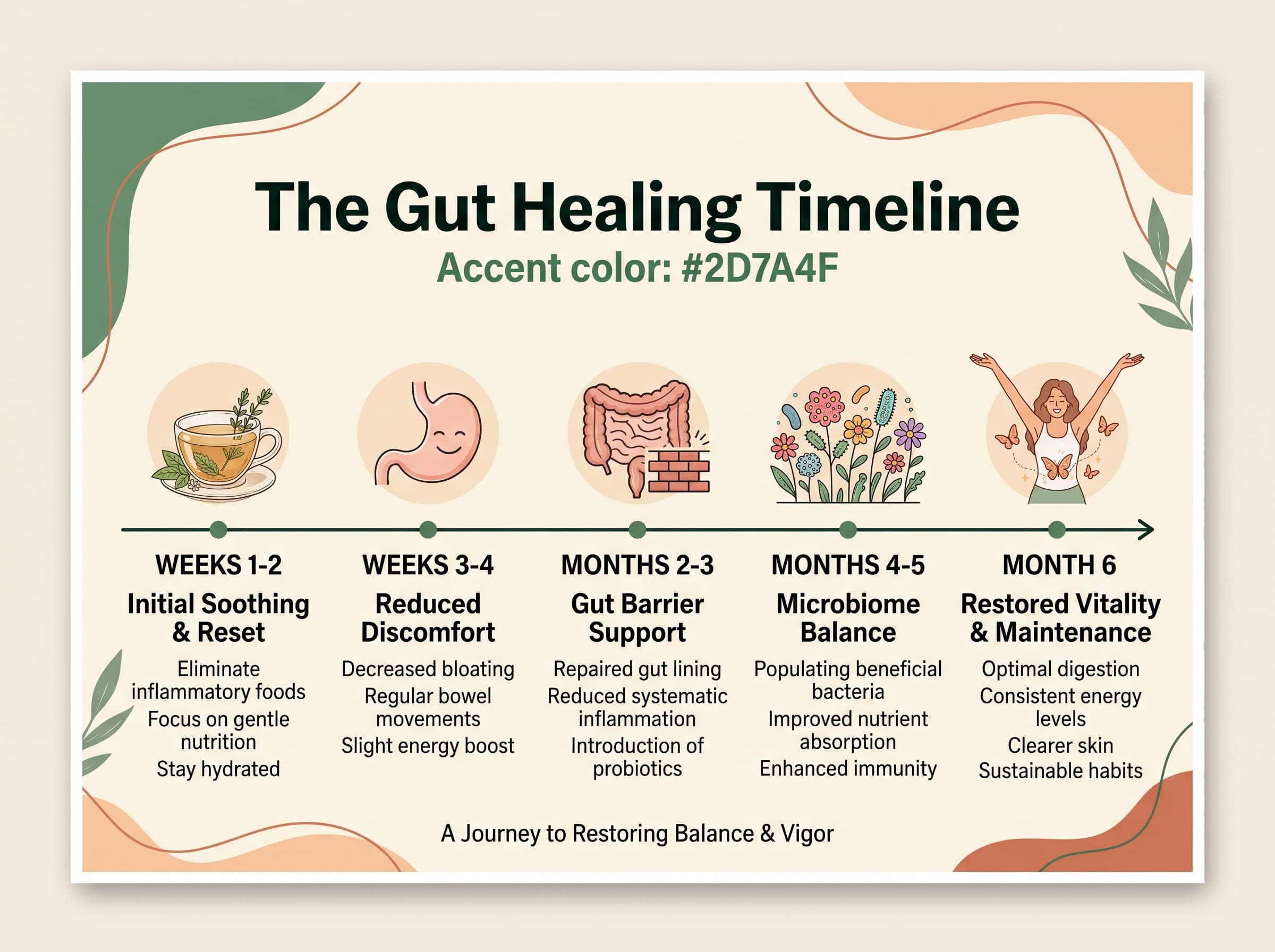
The Gut Healing Timeline Nobody Gives You (What to Actually Expect and When)
One of the most common reasons women abandon gut healing protocols is not that the approach they are following is wrong. It is that they do not know what to expect, do not know what timeline is realistic, and stop when the initial phase feels like it is making things worse rather than better.
The gut healing timeline that follows is not optimistic marketing. It is a realistic description of what actually happens physiologically during a genuine gut healing process, and when each change typically becomes noticeable.
The First Complication: Things Often Get Worse Before They Get Better
This is the piece that stops most people, and the piece that nobody warns them about clearly enough.
When highly processed food is replaced with high-fiber whole foods, the gut microbiome that has adapted to processing low-fiber food can initially respond with bloating, gas, and discomfort. The bacteria that were thriving on refined carbohydrates begin to die off. The fiber-fermenting bacteria that will ultimately improve gut function are initially overwhelmed by the new substrate volume.
This is not intolerance. It is not a sign that whole plant foods are wrong for your gut. It is the microbiome adapting to a better diet, and it typically resolves within four to six weeks when the transition is handled correctly.
How to handle the transition: increase fiber gradually over the first four weeks rather than switching overnight. Add digestive enzymes to the first two weeks of increased fiber consumption. Drink significantly more water alongside fiber because fiber absorbs water in the gut and insufficient hydration alongside high fiber intake worsens the temporary symptoms. Introduce fermented foods gradually as well, starting with small amounts and increasing over two to three weeks.
Weeks 1-2: The Removal Phase
When the primary gut disruptors are removed (refined sugar, alcohol, seed oils, gluten for most women, and ultra-processed food broadly), the most immediate change is usually in the digestive symptoms produced by those foods.
Within the first week of removal: bloating that was being produced by the fermentation of refined carbohydrates by pathogenic bacteria typically reduces noticeably. The specific bloating pattern produced by alcohol (gut lining disruption and motility alteration) resolves within three to seven days of complete abstinence.
Energy levels in week one are variable. Some women feel immediately better as blood sugar stability improves without refined sugar cycling. Others feel temporarily worse as the sugar dependency cycles out, producing mild headaches and fatigue for three to five days. This passes.
Sleep typically shows the first signs of improvement in week one if magnesium has been added and if sleep timing has been prioritized. Many women report deeper and more restorative sleep within the first week of magnesium glycinate at bedtime.
Weeks 3-4: The Early Repair Phase
By weeks three and four, if gut lining support has been introduced (L-glutamine on an empty stomach, bone broth or collagen peptides daily, adequate protein), the enterocyte cell renewal cycle begins to show early results. Enterocytes, the cells lining the intestinal wall, turn over approximately every three to five days. After three to four weeks of consistent support, the lining integrity begins measurably improving.
The most commonly noticed change in this phase: bowel regularity. Women who were chronically constipated often notice improvement in regularity and consistency by week three. Women who were experiencing loose stools from dysbiosis or alcohol-related disruption often notice firmer and more predictable stools.
Energy improvement becomes more consistent in this phase for most women. The blood sugar stability established in weeks one and two is now compounding. Afternoon energy crashes that were a daily event typically reduce in frequency or severity.
Months 1-2: The Microbiome Diversification Phase
Meaningful microbiome composition changes require approximately four to eight weeks of consistent dietary change to begin showing on testing. You will not feel this as a dramatic shift. You will feel it as a collection of subtle improvements that are individually easy to dismiss but collectively significant.
Food tolerances beginning to shift. Fermented foods that initially produced bloating become more tolerable as the microbiome gains capacity to process diverse bacterial inputs. Foods that previously caused reactions may produce less pronounced responses as the inflammatory load reduces.
Skin changes beginning. The gut-skin axis improvements from reduced intestinal permeability and reduced systemic inflammatory load begin expressing in the skin approximately four to eight weeks after the gut changes began. Hormonal acne that has a gut-driven inflammatory component often shows its first meaningful improvement in this window. Redness and inflammation-driven skin conditions may also begin stabilizing.
Mood stabilization. The gut-brain axis responds to microbiome improvement through changes in serotonin and GABA production. Many women notice reduced premenstrual anxiety, more stable mood throughout the month, and reduced reactivity to stressors by the six to eight week mark.
Months 2-3: The Integration Phase
By months two and three of consistent gut healing support, the changes that were beginning in months one and two become more established and less variable day to day.
Bloating that was occurring several times weekly has typically reduced to occasional or situational by this phase. Energy is more consistently stable throughout the day. Sleep is typically the most reliably improved system by this point.
For women with Hashimotos or thyroid autoimmune conditions who have also addressed the gut as part of their thyroid protocol: TPO antibody reductions are typically first measurable between eight and twelve weeks of consistent dietary change, selenium supplementation at 200mcg daily, and where applicable, gluten elimination.
Months 3-6: The Measurable Phase
If comprehensive microbiome testing is performed at month three and again at month six, the diversity changes should be measurable and significant. Beneficial bacterial species populations have had time to establish and compete against the pathogenic species that dominated the dysbiotic state.
Food sensitivities beginning to reduce. This is one of the most significant and most surprising changes for women in this phase. Foods that were previously reactive become more tolerable as gut lining integrity improves and the systemic inflammatory response that was amplifying reactions reduces. This is not universal and not guaranteed, but it is a reliable enough observation to include in a realistic timeline.
Hormonal symptoms measurably improving. For women whose hormonal symptoms had a significant gut component (and many do), the estrobolome improvements that reduce estrogen recirculation and improve estrogen metabolism produce changes in PMS severity, cycle regularity, and perimenopausal symptom intensity that become clearly noticeable by month three to six.
The skin has changed. By month six of consistent gut healing, skin that had a gut-driven inflammatory component is typically in a significantly different state than it was at baseline. Not necessarily perfect. But measurably different in terms of inflammation, breakout frequency and severity, and reactivity.
Month 6 and Beyond: The Maintenance Reality
Gut healing is not a project with a finish line. The microbiome requires ongoing dietary support to maintain the diversity that was built through the healing phase. Reintroducing the primary disruptors (seed oils, refined sugar, alcohol, ultra-processed food consistently) will progressively undo the microbiome changes.
The maintenance protocol is significantly less intensive than the healing protocol. It is primarily: dietary diversity (30+ plant foods weekly), regular fermented food consumption, adequate fiber, and avoidance of the primary disruptors on a mostly-consistent rather than always-perfect basis.
The gut that has been genuinely healed is more resilient. An occasional meal out, an occasional drink, an occasional holiday excess, does not undo months of work. The system has more baseline diversity and integrity than it did before the healing phase. It bounces back rather than collapsing.
This article is for educational purposes only. Individual gut healing timelines vary based on the starting state of the gut, the consistency of the protocol, and individual factors including genetics and existing health conditions. Please consult a qualified healthcare provider for personalized guidance.
More from Her Healthy Empire
The 10-Minute Habit After Meals That May Help Your Blood Sugar and Energy
A short walk after eating may do more than help you feel less sluggish. Research suggests post-meal movement can support the body’s glucose response, while adding an easy source of daily physical activity.
Why You’re Always Tired After 40, Even When You’re Getting Enough Sleep
Feeling exhausted even after a full night of sleep? Discover the overlooked reasons women over 40 may struggle with persistent fatigue, including sleep quality, perimenopause, iron, thyroid health, nutrition, stress, and more.
Period Changes in Perimenopause: What Is Normal?
Perimenopause can change cycle timing, flow, and duration. Some changes are expected, while unusual bleeding still deserves medical evaluation.
The next her healthy empire essay in your inbox.
One careful letter, every Sunday. Free.