Caloric quality does not determine where fat is stored. Cortisol does. Here is the exact mechanism that creates belly fat in women who eat well, and the interventions that actually address it.
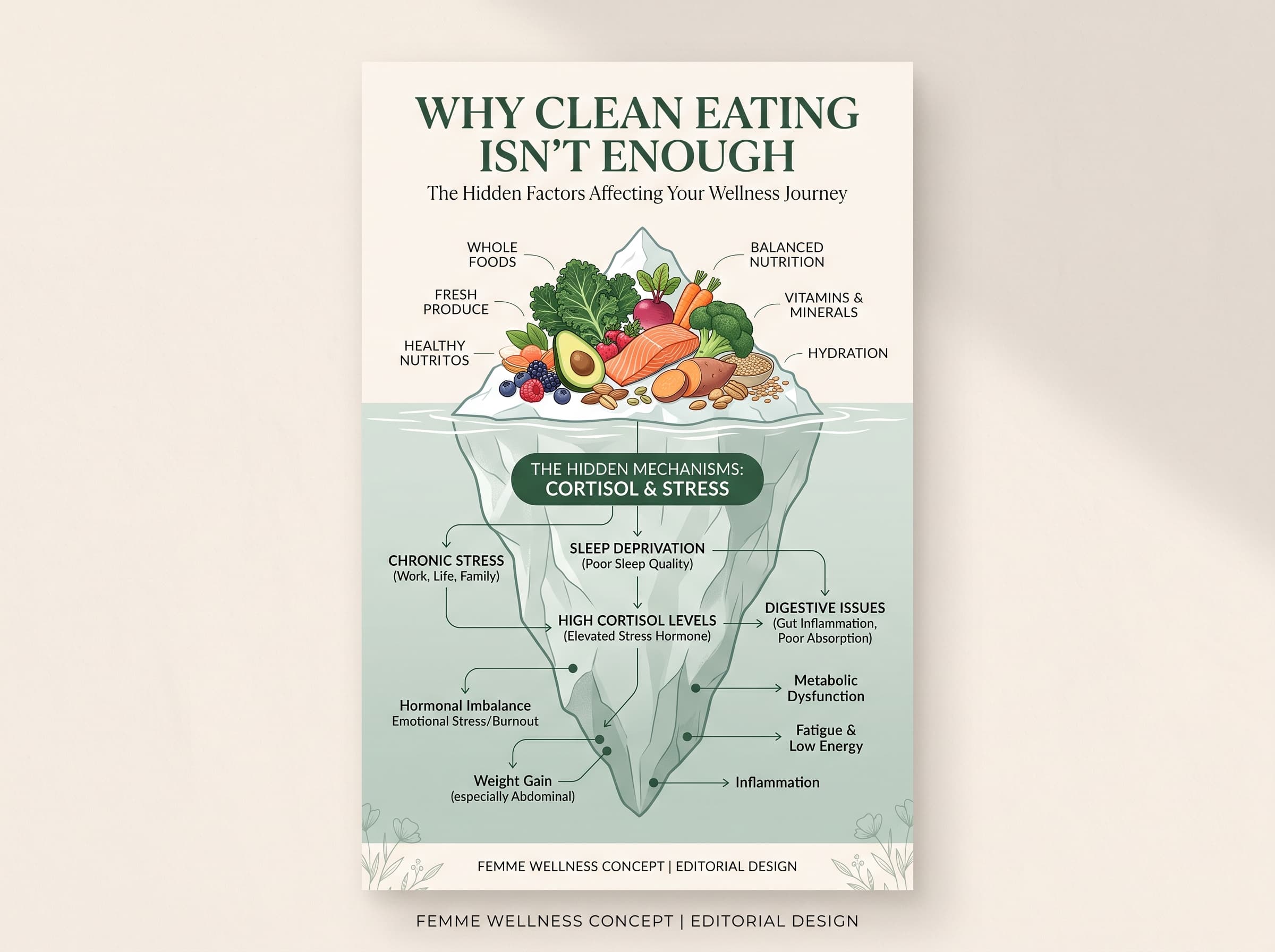
Why You Have Belly Fat Even Though You Eat Clean (The Cortisol Explanation)
This is one of the most common and most frustrating experiences in women's health: a woman who eats a genuinely clean diet, exercises regularly, and maintains a caloric intake that by all conventional logic should produce fat loss, but who carries persistent belly fat that will not move regardless of what she does.
She is told she must be eating more than she thinks. Or not exercising hard enough. Or that she needs to cut calories further.
All of this advice misses the actual mechanism entirely.
The Cortisol-Belly Fat Connection
Cortisol is a glucocorticoid hormone produced by the adrenal glands. It is often called a stress hormone, but that description undersells its systemic role. Cortisol is a metabolic regulator that directly controls where fat is stored and whether it is released or retained.
The specific mechanism that drives cortisol-related belly fat accumulation is this: omental fat tissue, the fat depot that surrounds the internal organs and constitutes what is commonly called belly fat, contains four times more cortisol receptors than subcutaneous fat tissue anywhere else in the body.
When cortisol is chronically elevated, it binds preferentially to omental fat tissue. This binding activates fat storage in that specific tissue and simultaneously suppresses the fat-burning enzymes called hormone-sensitive lipase in the same area. The result is a fat depot that is being actively told to store, actively prevented from releasing, and that sits directly in the region of the body most visible as belly fat.
This happens regardless of caloric intake. It happens regardless of dietary quality. It is hormonal direction of fat metabolism that operates independently of whether you ate pizza or salmon for dinner.
Why This Fat Is Different
Omental visceral fat is not simply a cosmetic concern. It is metabolically active in ways that subcutaneous fat elsewhere in the body is not.
Visceral fat cells produce inflammatory cytokines including TNF-alpha, IL-6, and resistin directly into the portal circulation, where they travel immediately to the liver. This creates a state of chronic low-grade hepatic inflammation that drives further insulin resistance, further cortisol dysregulation, and further fat storage in a compounding cycle.
Visceral fat also produces more estrogen through aromatase enzyme activity than any other fat depot. This means that as visceral fat accumulates, estrogen dominance symptoms can worsen. This is one of the reasons women who gain belly fat after 35 often notice simultaneously worsening PMS, breast tenderness, and hormonal symptoms that seem to appear alongside the weight change.
The Sources of Chronic Cortisol Elevation in Women
Identifying the cortisol drivers is more useful than simply knowing cortisol is the problem.
Chronic psychological stress is the most obvious driver and also the one most consistently dismissed as unsolvable. Chronic cortisol elevation from psychological stressors produces the same omental fat storage as cortisol elevation from any other source. Stress management is not a wellness luxury. It is a metabolic intervention.
Poor sleep and late sleep timing. Cortisol follows a circadian rhythm that is governed partly by sleep timing. Staying awake past 11 PM allows a secondary cortisol rise that should not occur. Insufficient sleep prevents the overnight cortisol clearance that deep sleep produces. Women who consistently sleep fewer than seven hours show significantly elevated morning cortisol and meaningfully greater visceral fat accumulation than women with adequate sleep duration and timing, even with identical dietary patterns.
Chronic cardio exercise. High-intensity steady-state cardio produces a cortisol elevation that persists for 24 to 48 hours post-exercise in women who are already cortisol-dominant. For women who exercise frequently with moderate to high intensity across the entire week, the cumulative cortisol cost can actively worsen the hormonal environment they are exercising to improve. This is the counterintuitive reality behind the woman who exercises daily and cannot lose belly fat.
Caloric restriction. Severe caloric deficits signal the body that food scarcity is present. The cortisol response to perceived famine is to elevate cortisol (to mobilize alternative fuel sources) and to suppress T3 thyroid hormone (to slow metabolism). This combination is the mechanism behind metabolic adaptation to dieting, and it is also a driver of visceral fat retention.
Blood sugar instability. Each blood sugar crash triggers a cortisol release to raise blood glucose back to functional levels. Women eating patterns that produce repeated daily blood sugar spikes and crashes are generating repeated cortisol pulses throughout the day. The afternoon energy crash at 3 PM is almost always a blood sugar event that produces a cortisol spike, and it adds meaningfully to the daily cortisol total.
Why Eating Clean Does Not Solve It
Dietary quality improves the nutrient input into a system that cortisol is controlling at the hormonal level. A clean diet reduces some of the dietary sources of cortisol elevation: refined sugar produces blood sugar instability which produces cortisol. Alcohol elevates cortisol directly. Processed food creates gut inflammation which feeds the cortisol-inflammation cycle.
But if the primary cortisol drivers are sleep deprivation, chronic psychological stress, excessive exercise, or caloric restriction, dietary quality addresses at best one portion of the hormonal environment.
This is why the woman who already eats cleanly often sees no movement in belly fat when she further cleans up her diet. She has already removed the dietary cortisol drivers. What remains is the lifestyle cortisol that food choices cannot touch.
The Correct Intervention Sequence
The sequence matters as much as the interventions themselves.
First: address sleep. Before exercise. Before dietary changes. Before supplements. Sleep before 10:30 PM consistently. Seven to eight hours minimum. This single change in a cortisol-dominant woman often produces more visible change in abdominal fat than any exercise or dietary change implemented without it.
Second: reduce exercise intensity, not exercise volume. Replace high-intensity steady-state cardio with resistance training three times weekly and daily walking at a comfortable pace. Resistance training builds the muscle that raises basal metabolic rate permanently and improves insulin sensitivity. Walking regulates cortisol without generating the 24-48 hour cortisol elevation that high-intensity cardio produces. Walking is specifically anti-inflammatory for visceral fat.
Third: address blood sugar stability. Protein and fat at every meal before any carbohydrates. Never carbohydrates alone. No meals skipped. A small protein and fat snack at 2 PM before the 3 PM blood sugar crash arrives rather than after.
Fourth: address the dietary cortisol contributors. Eliminate refined sugar, alcohol, and seed oils if they are still present. These are simultaneously contributing to blood sugar instability, gut inflammation, and direct cortisol elevation.
Fifth: consider adaptogens. Ashwagandha KSM-66 at 300-600mg daily reduces morning cortisol in multiple clinical trials. Rhodiola rosea reduces the cortisol response to acute stress. These are additions to a lifestyle that has addressed the primary cortisol drivers, not substitutes for addressing them.
The Honest Timeline
Visceral fat is stubborn specifically because it is being regulated hormonally rather than calorically. When the hormonal environment shifts through consistent sleep, appropriate exercise, and blood sugar stability, the cortisol signal that has been directing fat to omental tissue begins to reduce. The fat-storing signals decrease. The fat-burning enzymes in the tissue resume function.
This takes longer than conventional caloric fat loss. It is operating through hormonal mechanisms that change gradually over weeks and months. Most women who implement the full sequence consistently report visible change in abdominal fat at six to twelve weeks of sustained implementation, not days.
The approach that works is the one that addresses the actual mechanism. Eating cleaner on its own was never going to be enough.
This article is for educational purposes only and does not constitute medical advice. Please consult a qualified healthcare provider before making significant changes to your diet or exercise routine.
More from Her Healthy Empire
The 10-Minute Habit After Meals That May Help Your Blood Sugar and Energy
A short walk after eating may do more than help you feel less sluggish. Research suggests post-meal movement can support the body’s glucose response, while adding an easy source of daily physical activity.
Why You’re Always Tired After 40, Even When You’re Getting Enough Sleep
Feeling exhausted even after a full night of sleep? Discover the overlooked reasons women over 40 may struggle with persistent fatigue, including sleep quality, perimenopause, iron, thyroid health, nutrition, stress, and more.
Period Changes in Perimenopause: What Is Normal?
Perimenopause can change cycle timing, flow, and duration. Some changes are expected, while unusual bleeding still deserves medical evaluation.
The next her healthy empire essay in your inbox.
One careful letter, every Sunday. Free.